Call us for a FREE QUOTE: (+86) 138 5893 5900
Mail us to: [email protected]

Industry News
Home / News / Industry News / How to Choose the Right Aluminum Courtyard Gate for Residential and Commercial Properties

Picking the right aluminum courtyard gate matters more than most people first realise. It affects security, privacy, how the property looks from the street, and how well everything holds up over the years.
Aluminum already has clear advantages over traditional steel or iron. It is lighter, resists corrosion better, offers more design freedom, and needs less upkeep. Even so, a gate that works perfectly for a private villa is rarely the best choice for an apartment complex or a busy commercial entrance.
The points below help match the gate to both the practical needs and the overall look of the property.
Begin by being clear about where the gate will be used and how often it will open.
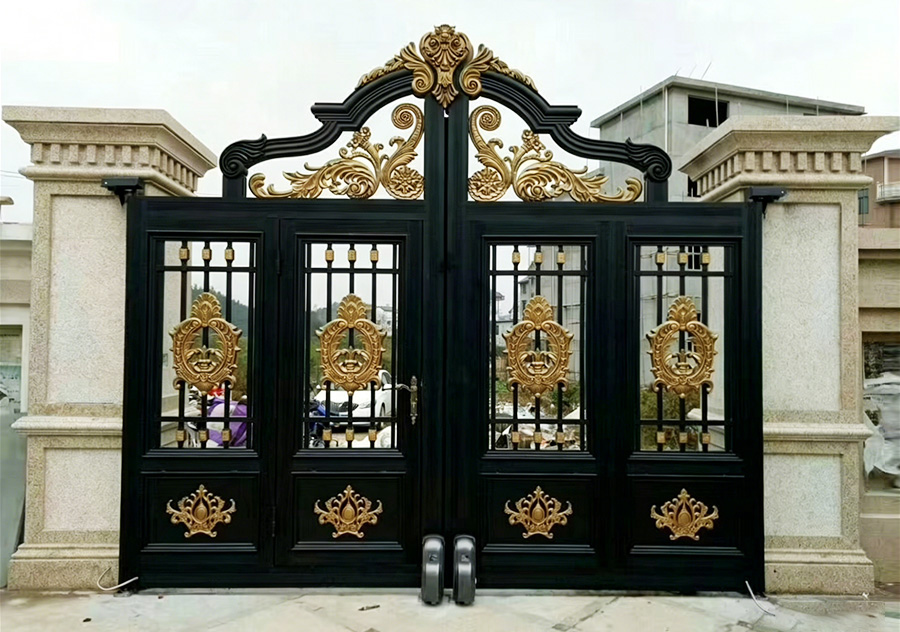
In villas, private homes and residential courtyards the focus is usually on appearance and privacy. Many owners prefer:
A residential gate works best when it feels like part of the house rather than something added later. Colour, pattern, finish and proportions can all be adjusted so the whole exterior stays consistent.
Commercial sites put more weight on durability, controlled access, traffic flow and day-to-day reliability. Typical places include:
Here you need to think about how frequently the gate will be used, how much space is available at the entrance, whether automation is required, and how easily it will connect to access-control systems.
Aluminum is flexible enough for both traditional and contemporary architecture.
Sliding gates make sense when there is little room for a swing gate to open. They travel sideways on a track and can be fitted with automation.
Common places for them are villas, driveways, apartment entrances, commercial properties and sites with narrow frontage.
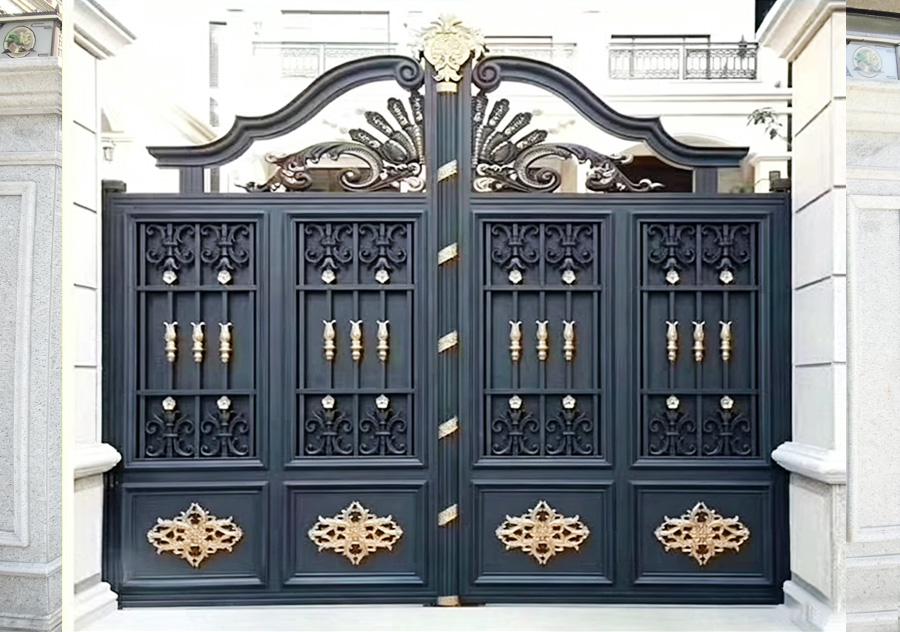
Swing gates give a more classic entrance feel and can become a strong visual feature. Single or double configurations are possible depending on the opening width and the layout of the site.
Solid or semi-solid panels reduce how much can be seen into the courtyard while still looking tidy from the outside. These are a practical option when privacy is a real priority.
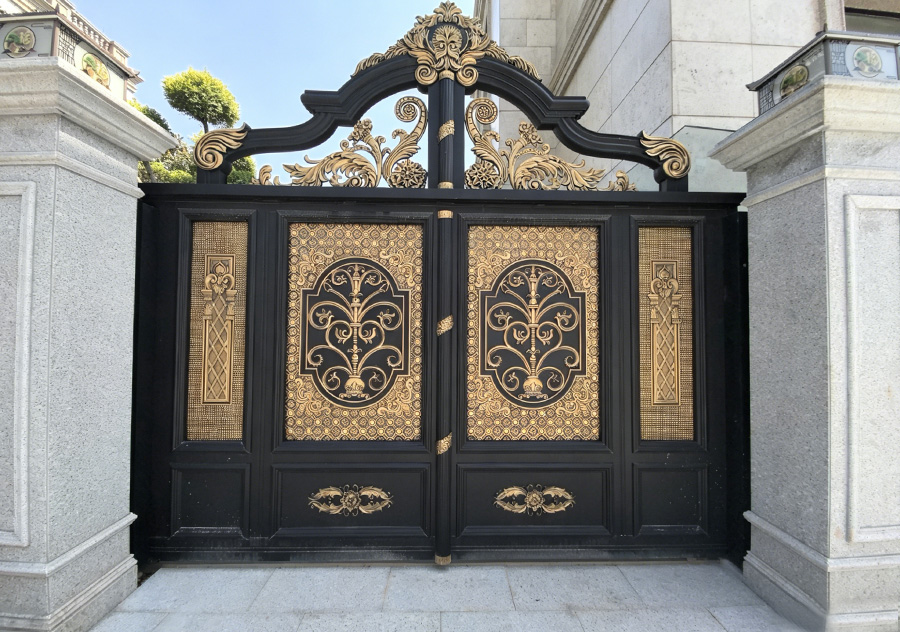
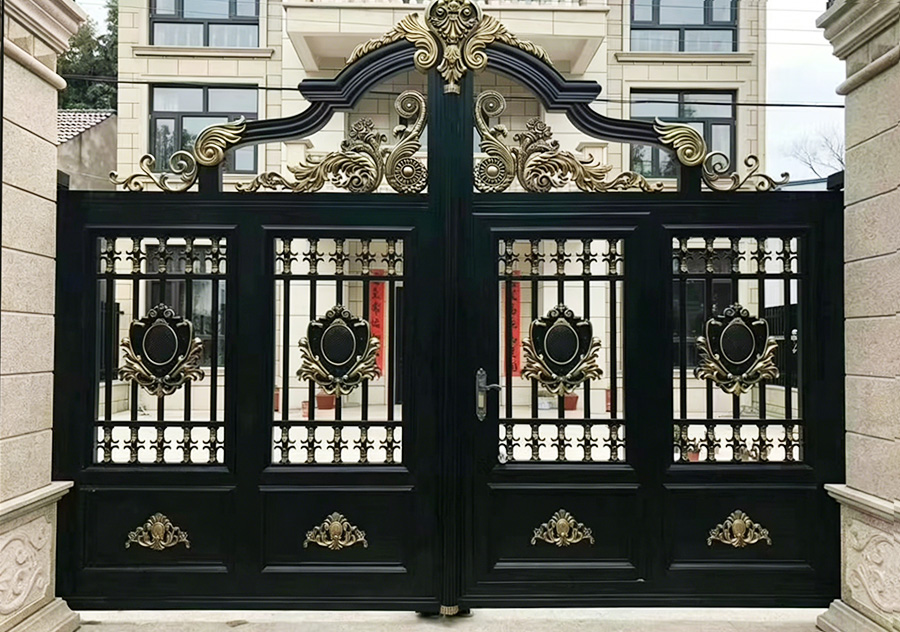
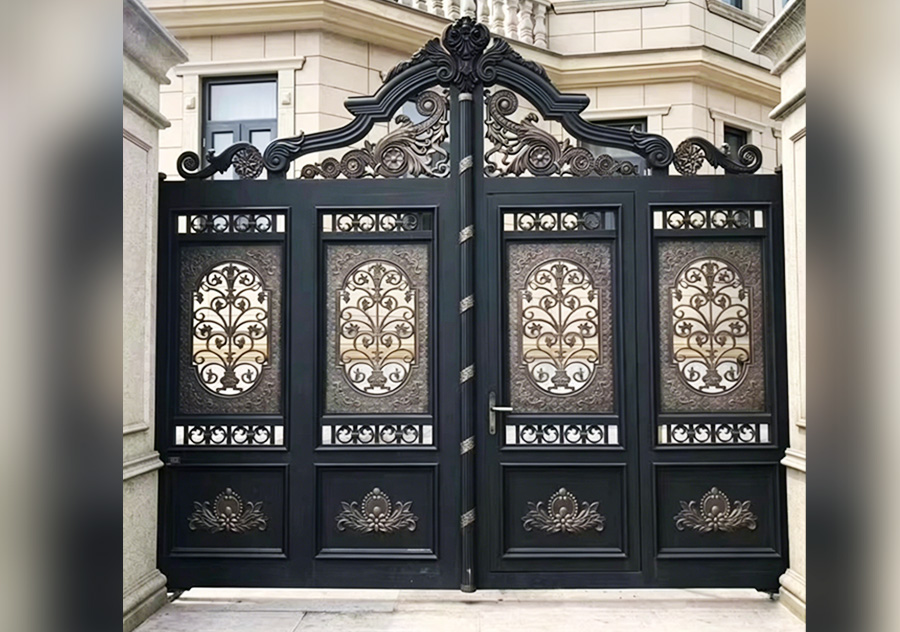
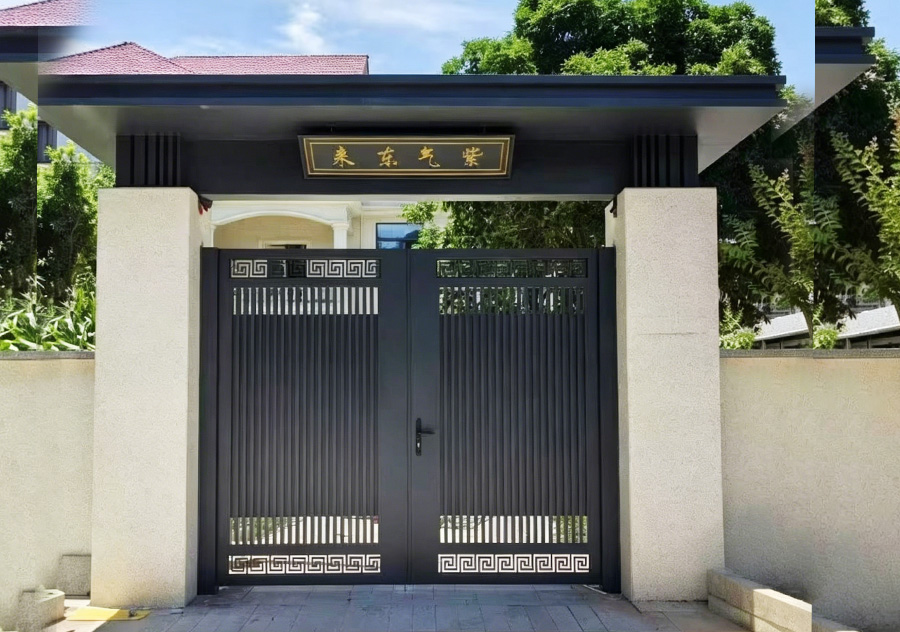
Decorative designs can include geometric patterns, horizontal or vertical lines, laser-cut details or custom ornamental work. They are chosen when the entrance itself needs to add to the property’s character.
Not every aluminum gate is built the same way. When comparing suppliers, look at the aluminum profile, how the frame is put together, the panel design, the connection methods and the overall structure.
A properly designed gate should balance structural strength, weight, size, wind resistance, hardware compatibility and long-term outdoor performance. Larger gates or ones that open many times a day usually need a stronger build than a smaller residential gate.
For professional projects it helps to give the manufacturer accurate details about the opening size, the installation environment and how the gate will actually be used.
One of aluminum’s biggest strengths is how well it handles outdoor conditions. The metal forms a natural protective layer, but the surface treatment still has a big effect on how the gate looks and lasts over time.
Common options include:
Powder coating is especially popular because it offers a wide range of colours and textures.
In coastal areas or places with high humidity, the quality of the surface treatment and the overall manufacturing standard become even more important.
The gate should sit comfortably with the rest of the architecture.
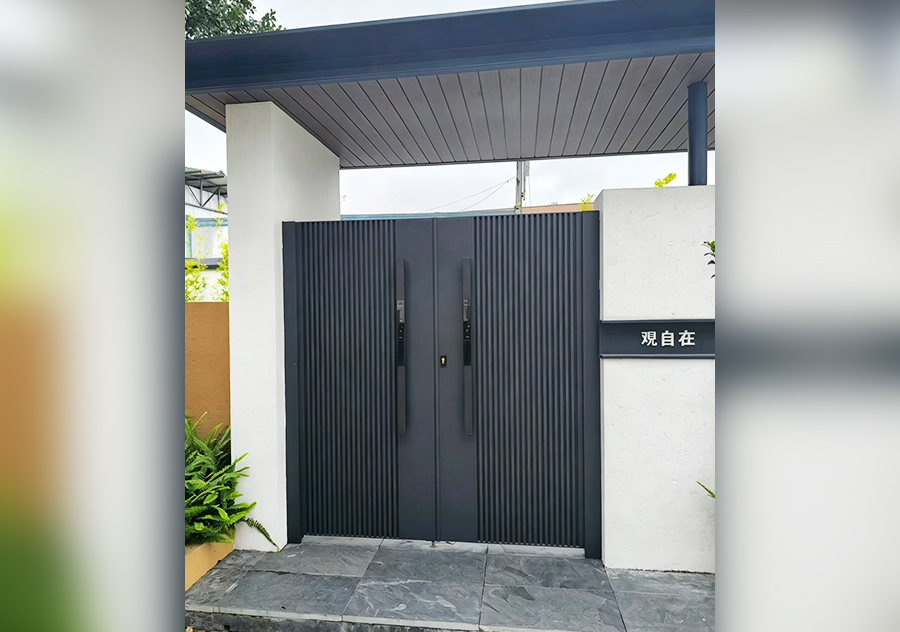
Modern buildings often look better with clean lines, simple geometric patterns, horizontal slats and minimalist frames. Villas or more traditional properties may suit decorative patterns, wood-grain finishes or custom ornamental details.
When choosing, think about how the gate works with the fence, exterior walls, doors, windows and the main building facade. Matching colours, materials and geometric details helps everything feel more coherent.
Privacy needs vary a lot from one property to another. A fully enclosed panel gives the highest visual privacy, while slatted designs allow different amounts of visibility and airflow.
| Gate Design | Privacy | Visibility | Typical Application |
|---|---|---|---|
| Solid Panel | High | Low | Private courtyards |
| Vertical Slats | Medium | Medium | Villas and residences |
| Horizontal Slats | Medium | Medium | Modern properties |
| Open Decorative Design | Low | High | Decorative entrances |
| Semi-Closed Panel | Medium-High | Limited | Residential and commercial |
The final choice depends on whether the main goal is privacy, ventilation, appearance, security, or a mix of these.
Where convenience and controlled access matter, the gate can be set up for automatic operation.
Before deciding, look at the gate weight, dimensions, whether it is sliding or swing, how often it will open, motor capacity, power supply, safety sensors and the access-control system that will be used.
For commercial or multi-user properties, the gate also needs to work smoothly with keypads, remote controls, card readers, intercoms or other access equipment. The manufacturer should know these requirements early so the structure and hardware can be coordinated properly.
Getting the measurements right is one of the most important steps for a custom aluminum courtyard gate.
You will need the overall opening width, the gate height, how much space is available for installation, ground clearance, post dimensions, and depending on the style either the sliding track space or the swing clearance.
Sliding gates need enough clear space beside the entrance so the leaf can open fully. Swing gates need the opening direction checked carefully along with any nearby obstacles. Giving the manufacturer accurate site dimensions early on helps avoid fitting problems later.
Aluminum gates generally ask for less day-to-day attention than traditional iron ones. Routine care usually comes down to cleaning off dirt and dust, checking the hinges and rollers, inspecting the fasteners, looking after the moving parts, checking the surface finish, and making sure drainage areas stay clear.
If the gate is automated, the motor, sensors, track and other mechanical parts also need occasional checks. A well-built gate with the right surface treatment and hardware tends to keep long-term maintenance lower.
For custom architectural gates, the manufacturer’s experience and actual capabilities make a noticeable difference to quality, consistency and how smoothly the project runs.
When looking at a supplier, it is worth checking the aluminum material specifications, manufacturing experience, surface-treatment options, welding and fabrication quality, ability to handle custom designs, quality-control process, hardware choices, packaging and transport, production capacity, and support for OEM or project-level customisation.
A good manufacturer should be comfortable working from architectural drawings, exact dimensions, finish requirements and functional needs rather than just offering a standard product. For contractors and project buyers, dealing directly with an experienced factory often makes discussions about customisation clearer and quicker.
No single aluminum courtyard gate design works for every property. Customisation can cover the gate dimensions, frame profiles, panel layout, slat spacing, decorative patterns, surface colour, wood-grain effects, opening method, hardware and automation compatibility.
On residential projects, this flexibility helps the gate match the homeowner’s architectural preferences. On commercial developments it helps keep a consistent look across multiple entrances and buildings.
Before placing an order it is useful to run through the following points:
Choosing the right aluminum courtyard gate is about more than finding a design that looks good on paper. The best solution balances appearance, durability, privacy, security, size, operating method, maintenance and the actual needs of the project.
Residential properties often put design flexibility and privacy first. Commercial sites usually focus more on durability, access control, automation and frequent daily use.
By checking the gate style, aluminum construction, surface finish, dimensions, operating system and the manufacturer’s real capabilities before ordering, property owners and professional buyers can select a gate that performs well over the long term and still sits comfortably with the architecture.
For custom projects, working with an experienced aluminum courtyard gate manufacturer and factory gives more room to adjust dimensions, finishes, configurations and design details as needed.
Phone
(+86) 138 5893 5900
Address
Chengxi High-tech Zone, Yongkang City, Zhejiang Province, China