Staircase Railing Systems for Safe, Modern Building Design
Staircase railings are something people use every day, even if they don't really notice them. They're there for support when going up and down stairs, and they also help keep the edges of open staircases safe. At the same time, they finish off the space and make the stair area look more put together.
You'll find them in all kinds of places—homes, villas, apartment buildings, hotels, offices, and commercial spaces. In most cases, the expectation is simple: the railing should feel solid, look tidy, and hold up well over time.
Today, stair railings come in different styles. Some projects stick to basic metal handrails with straight, simple lines. Others mix materials like glass, aluminum, or stainless steel to make the space feel more open and light.
What gets chosen usually comes down to the building itself—its style, safety needs, available space, and how much daily use the stairs will get.
Why Staircase Railing Matters in Building Projects
A staircase without a railing usually feels unfinished, and more importantly, it’s not very safe. The railing is there for support when people go up and down, and it also helps protect open edges like stairs, landings, or balconies.
In real use, a good railing system helps with a few basic things:
- Makes moving between floors safer
- Gives extra support for children, older people, and daily use
- Reduces the risk of falling at open stair edges
- Keeps the stair area looking more organized
- Helps the stairs blend better with the surrounding space
- Holds up over time in homes and commercial buildings
Beyond safety, it also affects how the space feels. A bulky design can make the stair area look tight or heavy. A simpler railing usually keeps things more open and easier on the eye.
Common Materials Used for Staircase Railings
Stair railings can be made from different materials, and each one has its own use depending on the project. Some are chosen because they feel solid, others because they look clean, and some simply need less upkeep.
In many modern buildings, you’ll usually see aluminum, stainless steel, and glass.
Common types include:
- Aluminum stair railings
- Stainless steel handrails
- Tempered glass railings
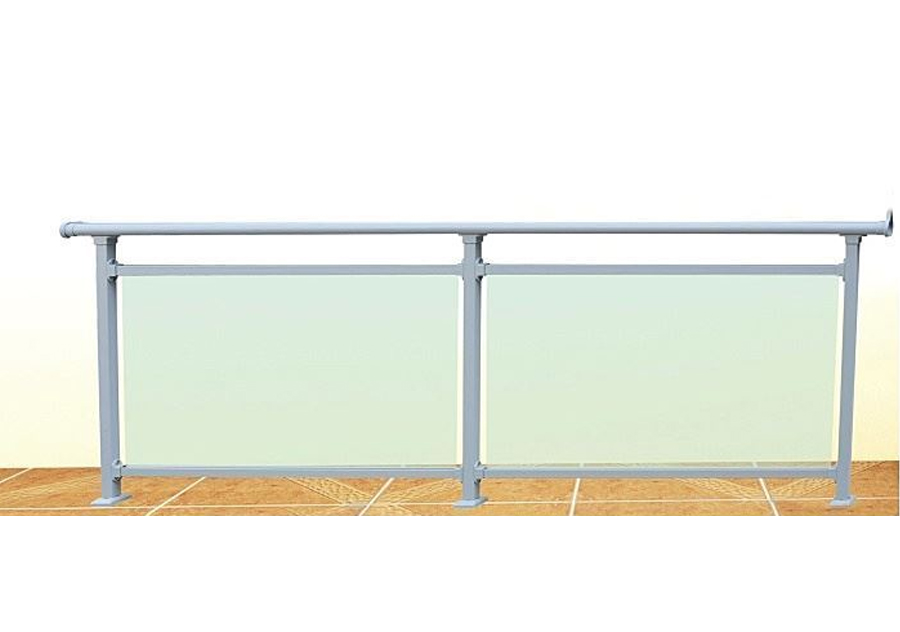
- Aluminum and glass combinations
- Powder-coated metal railings
- Outdoor metal handrail systems
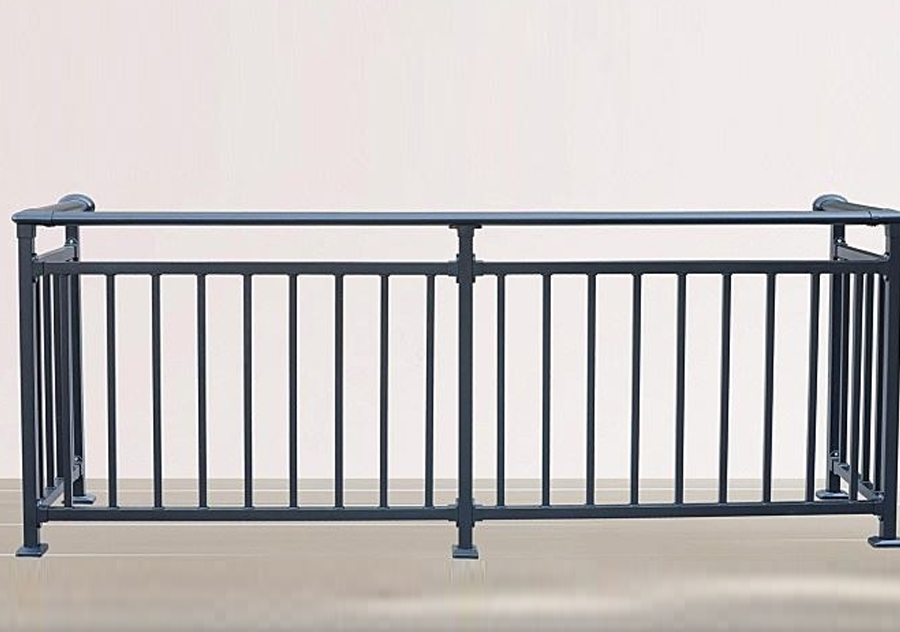
- Simple vertical bar designs
- Custom mixed-material railings
Aluminum is often used when weight and outdoor durability matter. Stainless steel is picked for its strength and a neat, straightforward look, especially in commercial spaces. Glass railings are more common in newer homes, hotels, and offices because they don’t block the view and make the stair area feel more open.
Modern Stair Handrail Designs for Different Spaces
A stair handrail mainly needs to be practical. It should be easy to grip, stay stable, and fit the style of the building. In many modern projects, simpler designs are used because they don’t clash with common materials like wood, stone, glass, or metal.
Typical styles include:
- Straight aluminum handrails
- Round stainless steel handrails
- Square-profile handrails
- Wall-mounted handrails
- Glass railings with a metal top rail
- Simple designs for residential villas
- Powder-coated outdoor handrails
- Custom railings for commercial buildings
In homes, handrails are usually kept light and unobtrusive so they don’t take attention away from the space. In public or commercial buildings, durability and easy cleaning are often more important. For outdoor stairs, the main concern is how well the surface holds up after long exposure to sun, rain, and dust.
Balustrade Railing for Stairs, Balconies, and Platforms
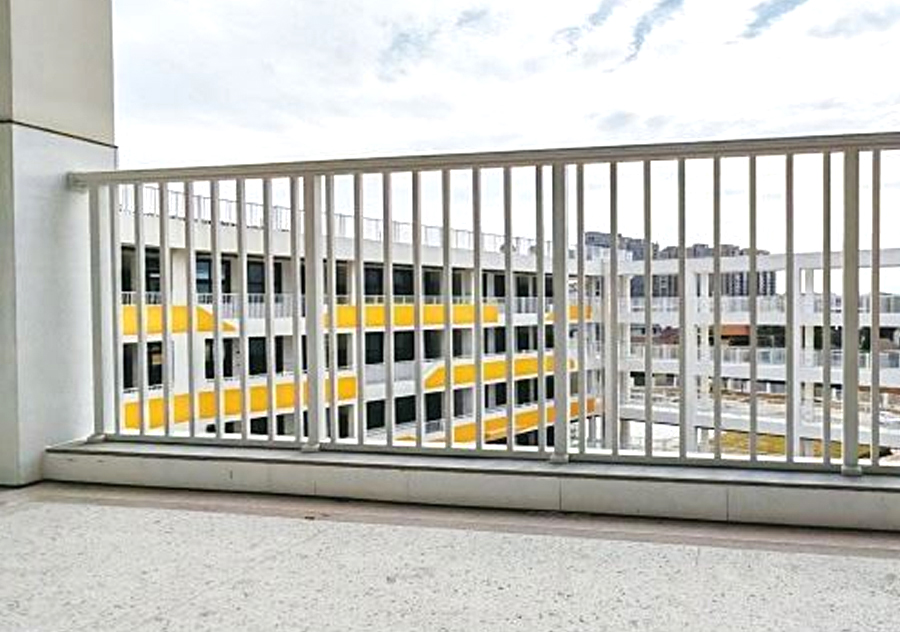
Balustrade railings are not just used on stairs. They’re also installed in many other places where there’s an open edge that needs basic protection, like balconies, terraces, ramps, corridors, or raised walkways.
The main idea is simple—keep the edge safe, while still letting the space feel open and connected.
Common uses include:
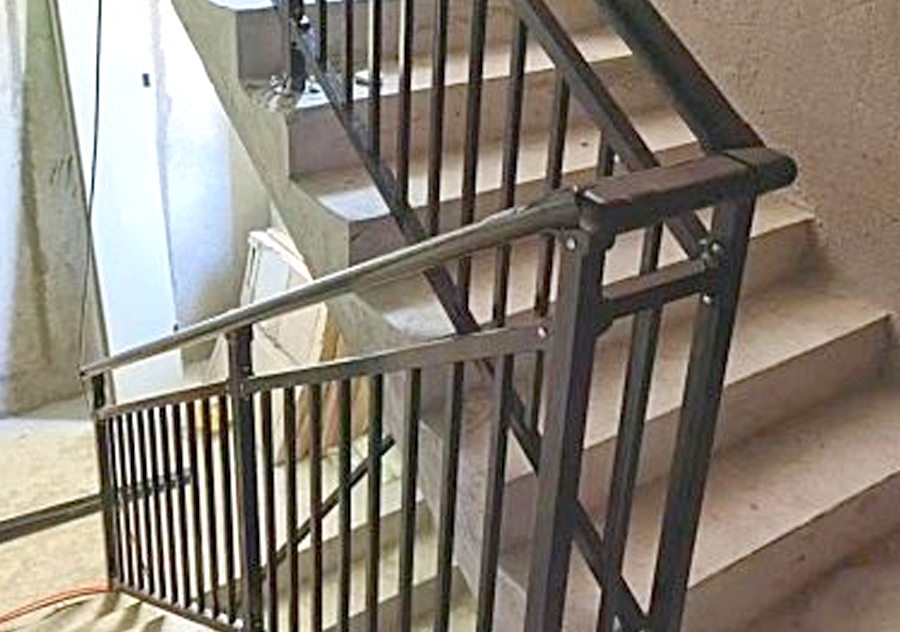
- Indoor staircases
- Outdoor stairs
- Villa stair railings
- Apartment balconies
- Hotel lobby stairs
- Office buildings
- Shopping malls
- Residential balconies
- Terraces and rooftops
- Public walkways
- Raised platforms
- Commercial buildings
In many projects, the same railing style is used across different areas so the building feels more unified. For example, a mix of glass and aluminum might be used on stairs and balconies at the same time, so everything looks consistent without being repetitive.
Indoor and Outdoor Staircase Railing Requirements
Indoor and outdoor stair railings don’t really follow the same priorities. Inside a building, people usually pay more attention to how the railing looks and how it feels to use in daily life. Outside, it’s more about how well it holds up over time.
For indoor stair railings, the focus is often on:
- A simple and clean design
- A comfortable handrail size
- A smooth surface
- Matching with nearby materials like wood, tile, or glass
- Safe spacing between posts or panels
- Secure fixing to stairs or walls
For outdoor stair railings, the situation is different:
- Materials that won’t rust easily
- Coatings that can handle sun and rain
- Strong, reliable fixing points
- Drainage so water doesn’t stay around the base
- Better resistance to sunlight over time
- Less need for maintenance
In most outdoor projects, aluminum and stainless steel are commonly used because they handle weather changes better. Finishes like powder coating or anodizing are usually added just to help the surface last longer without much extra care.
Surface Finishes and Color Choices
The finish on a staircase railing matters for both appearance and how it ages over time. It’s something that should still look acceptable after years of use, not just right after installation.
Common options include:
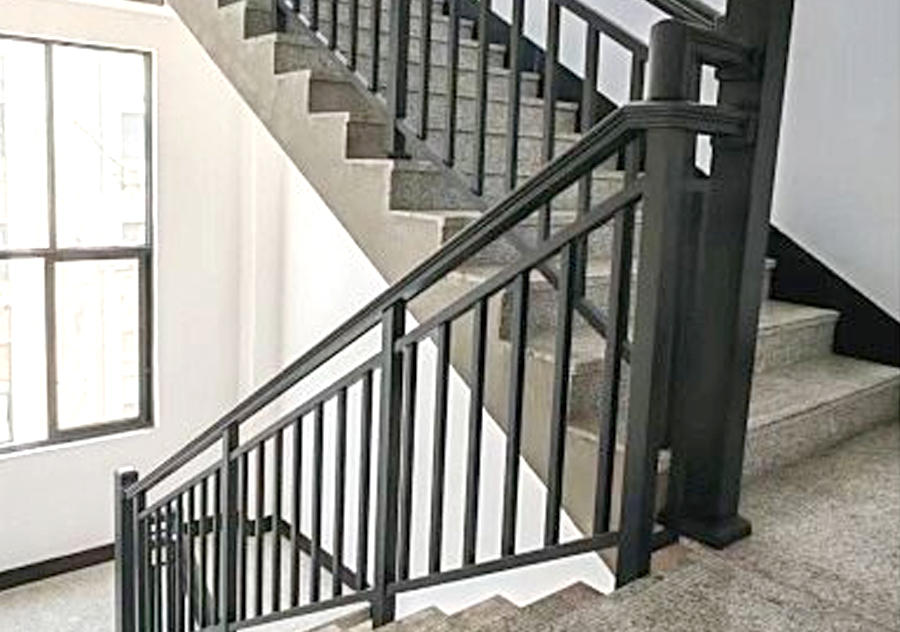
- Matte black powder coating
- Brushed stainless steel
- Silver aluminum finish
- White powder coating
- Dark grey finish
- Bronze color
- Wood-grain aluminum
- Custom colors depending on the project
In practice, black and dark grey are often chosen for modern buildings because they sit well with materials like concrete, glass, and stone. Brushed stainless steel is more common in commercial spaces since it’s straightforward and easy to maintain. Wood-grain finishes are usually used when a warmer look is needed, but real wood would be harder to maintain in the long run.
What to Check Before Choosing Staircase Railing
A staircase railing needs to fit the actual site, not just look good on paper. Even a simple design has to match the stair size, layout, and how the space is built.
Before production or installation, it’s usually worth confirming a few basic things:
- Stair size and layout
- Required railing height
- Handrail shape and how it feels to grip
- Whether it’s for indoor or outdoor use
- Material and surface finish
- Spacing between bars or glass panels
- How it will be fixed in place
- Connection between posts and steps
- Whether it needs to match balconies or nearby railings
- Expected level of maintenance
- Final drawings and measurements
When these details are clear at the beginning, installation tends to go more smoothly. It also helps avoid common issues like uneven spacing, incorrect height, or fixing points that don’t line up well with the structure.
Staircase Railing for Residential and Commercial Buildings
Staircase railings are used in many different places, but the needs are not always the same. In a villa, people usually care more about how it fits the interior. In apartment buildings, it has to be strong enough for everyday use. In hotels, offices, and shopping areas, safety and easy cleaning usually come first.
Typical uses include:
- Villa stair railings
- Handrails in residential buildings
- Railings in commercial spaces
- Glass railings in hotels
- Outdoor stairs in public areas
- Aluminum railings for apartments
- Stainless steel handrails in offices
- Custom railing systems for specific projects
In most cases, a good railing is one that feels natural in the space. It should work with the stairs and also match the surrounding walls, floors, and overall building style, instead of standing out on its own.
Maintenance of Staircase Handrails and Railings
Most staircase railings are not difficult to look after, especially if the material suits the place where they’re installed. A bit of regular cleaning is usually enough to keep them in good condition.
Basic care is usually simple:
- Wipe handrails with a soft cloth
- Clean glass panels with normal glass cleaner
- Remove dust and marks from metal surfaces
- Check screws and fixing points from time to time
- Avoid strong chemical cleaners on coated finishes
- Take a quick look after heavy rain or strong wind
- Keep drainage areas clear for outdoor railings
For aluminum and stainless steel, regular wiping and light cleaning is often enough. Glass railings just need a bit more frequent cleaning to keep them clear and not look cloudy.
Staircase railings are something people rely on every day without really noticing it. They’re there to support movement, add a basic layer of safety, and make stairs, balconies, or raised areas feel more complete.
When the basic details like height, material, finish, and installation are properly handled, the railing usually stays stable for a long time without much issue.
There are many ways to design it now. Some are very simple, some more decorative; some stay open, others use glass for a lighter look. In the end, it mostly depends on where it’s going and how the space is used.
For villas, residential buildings, commercial projects, hotels, and outdoor areas, a well-made railing system helps keep things safe and visually in order.
HEQI is a supplier that focuses on these kinds of staircase railing and balustrade systems, providing options for different building needs.
FAQ About Staircase Railing and Balustrade Systems
1. What is the difference between a railing and a balustrade?
A railing usually refers to the hand support or protective barrier along stairs, balconies, or platforms. A balustrade is the complete system, often including posts, panels, balusters, handrails, and fixing parts. In many building projects, the two terms are used together.
2. What materials are commonly used for modern stair railing?
Common materials include aluminum alloy, stainless steel, tempered glass, and powder coated metal. Some designs combine metal posts with glass panels or use aluminum handrails with vertical balusters for a clean modern look.
3. Can staircase railings be used outdoors?
Yes. Staircase railings can be used outdoors if the material and surface treatment are suitable. Aluminum alloy, stainless steel, and powder coated finishes are often used for outdoor stair railing because they offer better resistance to rain, sun, and humidity.
4. Are glass balustrade railings safe?
Glass balustrade railings can be safe when they are made with proper tempered or laminated glass and installed with suitable fittings. The glass thickness, fixing method, and railing height should match the project’s safety requirements.
5. What finish is best for outdoor staircase railing?
For outdoor staircase railing, powder coating, anodized aluminum, or stainless steel finishes are commonly used. The best option depends on local weather, exposure level, and the desired appearance.
6. Can staircase railing be customized?
Yes. Staircase railing can usually be customized by height, length, material, color, handrail shape, post style, panel type, and installation method. Custom drawings are often useful when the staircase layout is complex.
7. What should be checked before installing stair handrails?
Before installation, it is important to check stair dimensions, railing height, post position, fixing base, wall condition, handrail direction, surface finish, and safety spacing. Accurate measurement helps avoid installation problems.
8. Is aluminum staircase railing easy to maintain?
Yes. Aluminum staircase railing is generally easy to maintain. It does not rust like ordinary iron and can be cleaned with water, mild detergent, or a soft cloth. Outdoor aluminum railings should be checked occasionally after harsh weather.
9. Where are modern stair railing systems commonly used?
Modern stair railing systems are commonly used in villas, apartments, hotels, office buildings, shopping centers, schools, public buildings, balconies, terraces, and outdoor stairways.
10. How do I choose the right railing and balustrade system?
The right system depends on the installation location, safety needs, building style, material preference, maintenance expectations, and budget. A good railing should be stable, comfortable to use, visually suitable, and appropriate for indoor or outdoor conditions.


 English
 Español
 русский