Aluminum Gazebo Designs for Outdoor Shade, Structure and Landscape Style
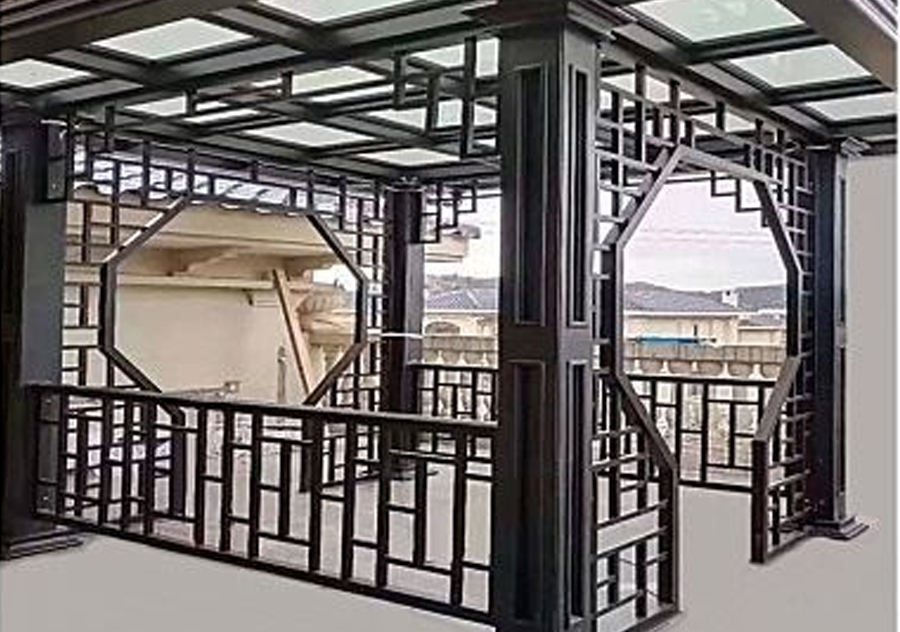
An aluminum gazebo is often the point where comfort and outdoor design meet. It gives people a shaded place to sit, eat, talk, or rest, while also helping the space feel more planned and complete. In a garden, it can become a quiet corner. On a restaurant terrace, it can define a seating zone. In a hotel courtyard or resort landscape, it can add structure without closing off the view.
The value of an aluminum gazebo is not only in how it looks. It also needs to deal with sun, rain, humidity, dust, and daily outdoor use. That is why aluminum alloy has become a common material for modern gazebo structures. It is lighter than many traditional metals, easier to maintain than wood, and more resistant to rust than ordinary iron.
Outdoor Spaces Need More Than Decoration
A gazebo is sometimes treated as a decorative item, but in real projects it usually has a practical job. It creates shade, gives the outdoor area a clear purpose, and makes open space easier to use.
A well-placed aluminum gazebo can help with
- Creating a shaded seating area
- Making gardens and patios more usable
- Separating dining or rest zones outdoors
- Adding a visual center to courtyards
- Improving comfort in hotel and resort landscapes
- Supporting outdoor events or casual gatherings
- Giving public spaces a simple resting point
The best gazebo designs do not feel forced. They match the scale of the space, sit naturally with nearby plants or buildings, and provide enough function without making the area feel crowded.
Why Aluminum Works Well for Gazebo Structures
Gazebos are always outside, so the material has to deal with weather day after day. Wood can look nice at first, but it usually needs regular upkeep. Iron is strong, but once it starts to rust, it becomes a problem.
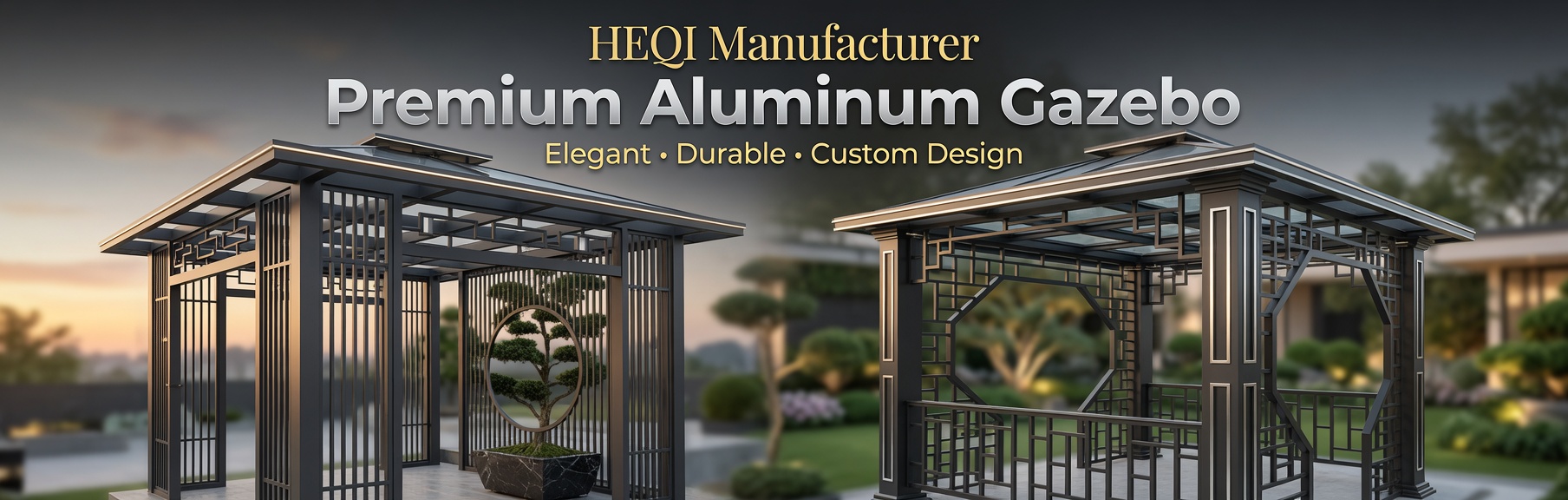
Aluminum is often used because it’s easier to live with. It doesn’t rust easily, and it can handle normal rain and sun without much change. It’s also lighter, so installation is usually simpler.
In most cases, aluminum gazebo frames are used because
- It holds up well outdoors
- It doesn’t need much maintenance
- It’s lighter and easier to install
- It suits simple, modern designs
- It can be made in different shapes
- It works in gardens, patios, and public spaces
- It lasts well with basic surface treatment
For many outdoor projects, it’s not about being fancy. Aluminum just ends up being a practical choice that stays stable and doesn’t require much attention after installation.
Aluminum Gazebo Styles for Different Outdoor Settings
Different outdoor spaces usually need different gazebo setups. A private villa garden often goes for something quiet and simple. A restaurant or café patio needs a design that can handle regular use. In parks or public areas, the structure is usually kept basic so it doesn’t stand out too much.
Some common styles include
- Simple modern gazebos with straight frames
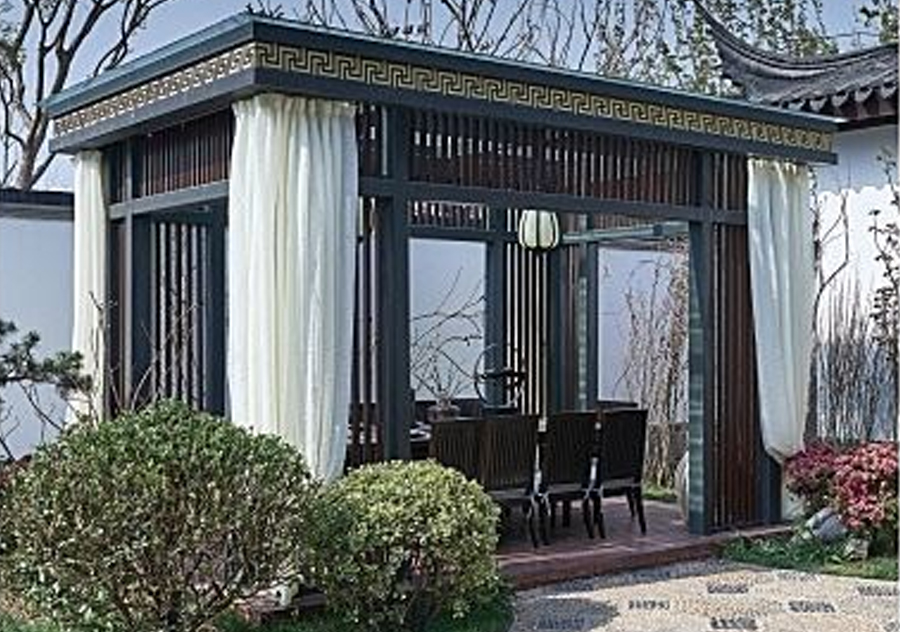
- Garden gazebos with light decorative details
- Patio gazebos for seating areas
- Open courtyard gazebos
- Gazebos for restaurant terraces
- Hotel garden or landscape gazebos
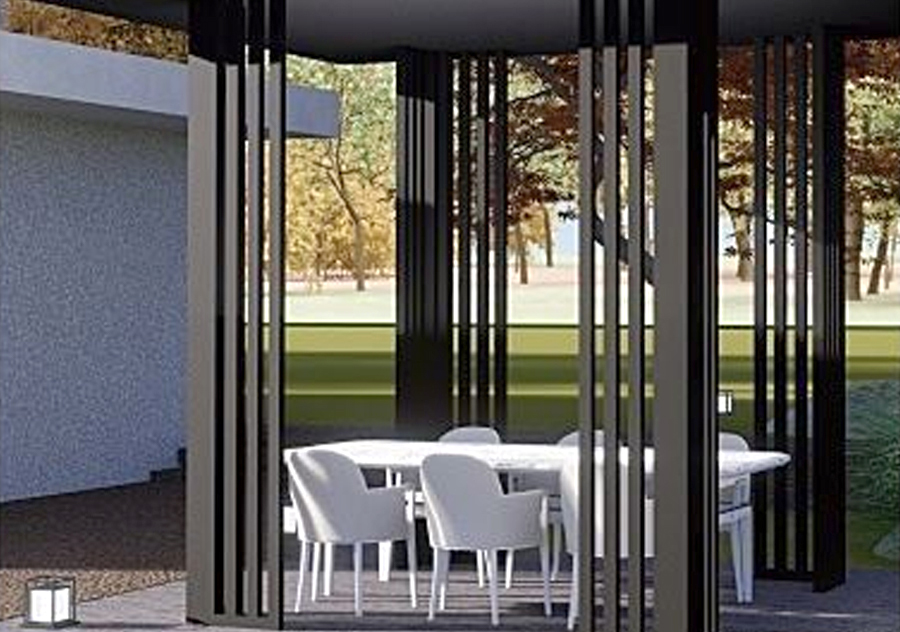
- Resort-style gazebos with partial screens
- Custom designs for specific layouts
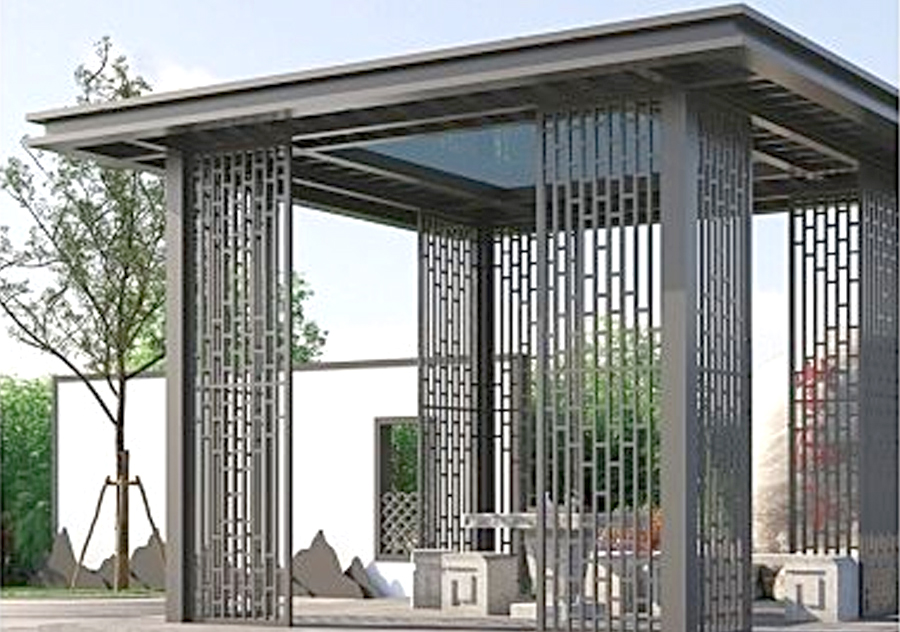
In general, simpler designs tend to fit better with modern buildings, especially when paired with materials like glass, stone, or clean paving. More decorative styles are usually used in villas, gardens, and resorts, where the gazebo is also part of the overall look of the space.
Custom Aluminum Gazebo Options
A custom aluminum gazebo is usually made when a standard size doesn’t quite fit the space. Outdoor areas often already have things like paving, walls, trees, pools, or fixed seating, so the layout needs to be adjusted around them.
Typical custom choices include
- Length and width based on site size
- Overall height
- Roof shape
- Column thickness
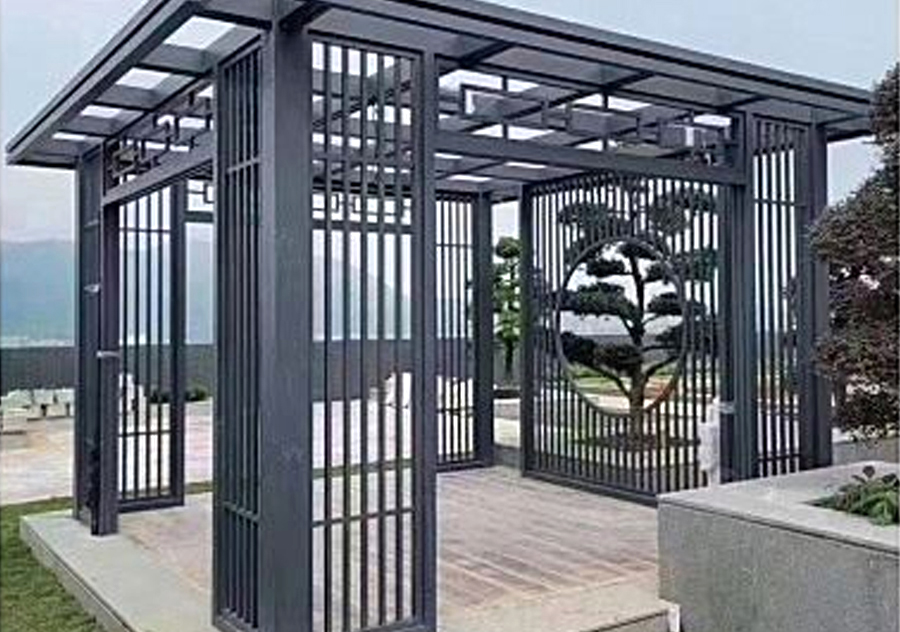
- Side panels or screens
- Open or semi-closed layout
- Powder-coated finish
- Color options like black, grey, white, bronze, or custom tones
- Wood-grain finish
- Matching gates, fences, or railings
- Base and fixing method
Custom design is mostly about making the gazebo sit naturally in the space. For example, a dark, simple frame often works well with concrete and glass areas, while warmer finishes like bronze or wood-grain tend to fit better in gardens or courtyards.
Roof Design and Shade Performance
The roof is one of the key parts of an aluminum gazebo. It affects how much shade you get, how rain is handled, and also how the structure looks when you stand under it.
In most projects, a few basic points are usually considered
- Whether the roof is flat or slightly sloped
- How far the edge extends
- Where the rainwater is directed
- How the roof edge is finished
- How it performs in different weather
- How much shade it provides during the day
- Whether it matches nearby buildings
In places like restaurant terraces or hotel courtyards, the roof directly affects how comfortable people feel sitting underneath. In gardens, it also needs to work naturally with trees, paths, and seating areas.
A roof that only looks good but doesn’t handle rain or shade properly often causes issues later. In practice, function is usually more important than appearance.
Surface Finish and Color Selection
The surface finish of an aluminum gazebo affects both durability and appearance. Since gazebos are usually exposed to outdoor conditions, the coating should be selected based on the environment and the expected look.
Common finish choices include
- Powder coated aluminum gazebo
- Matte black aluminum gazebo
- Dark grey aluminum gazebo
- White aluminum gazebo
- Bronze aluminum gazebo
- Silver grey aluminum gazebo
- Wood-grain aluminum gazebo
- Custom color aluminum gazebo
Matte black and dark grey are often used for modern garden and patio designs. White can make the structure feel lighter in residential spaces. Bronze works well with traditional architecture. Wood-grain aluminum gives a warmer look without the maintenance needs of real wood.
A good finish should not only look clean at installation. It should also help the gazebo keep its appearance after long exposure to sun, rain, and dust.
Aluminum Gazebos for Restaurants and Hospitality Spaces
Outdoor seating has become an important part of many restaurants, cafés, hotels, and resorts. An aluminum gazebo can help make these areas more organized and comfortable while keeping the design open.
In hospitality spaces, aluminum gazebos are often used for
- Restaurant outdoor dining areas
- Café patio seating
- Hotel garden rest areas
- Resort walkways
- Poolside relaxation zones
- Courtyard lounge spaces
- Outdoor waiting areas
- Event and reception spaces
For these settings, the gazebo should be easy to clean, visually tidy, and stable enough for regular use. A simple design often works best because it does not compete with furniture, lighting, signage, or landscape elements.
Aluminum Gazebos for Gardens, Villas and Courtyards
In private outdoor spaces, the gazebo usually has a more relaxed role. It can provide shade for reading, tea, family gatherings, or quiet rest. It can also become the main visual feature in a garden or courtyard.
Common residential uses include
- Villa garden seating
- Backyard patio shade
- Courtyard rest space
- Terrace lounge area
- Poolside shade structure
- Garden path feature
- Outdoor dining corner
- Decorative landscape structure
For villas and gardens, proportions matter a lot. A gazebo that is too large can make a courtyard feel small. One that is too plain may disappear in a detailed landscape. The design should match the surrounding walls, paving, plants, and outdoor furniture.
Aluminum Gazebo Factory Production Considerations
An aluminum gazebo factory usually needs to control both structure and finish. Since gazebos are larger outdoor products, small production details can affect installation, appearance, and long-term performance.
Important production details include
- Aluminum profile quality
- Accurate cutting and assembly
- Stable column and roof structure
- Smooth surface treatment
- Consistent powder coating
- Proper hole positions and connectors
- Protective packaging for transport
- Clear installation parts and accessories
Good production is not only about making the gazebo look attractive in photos. The parts need to fit correctly on site, the coating should be even, and the structure should stay stable after installation.
What to Confirm Before Installing an Aluminum Gazebo
Before making or installing an aluminum gazebo, it’s better to sort out the site details first. If everything is clear in advance, the installation usually goes smoother and there are fewer adjustments on site.
Some basic things to check include
- Exact location
- Ground condition and levelness
- Size of the gazebo
- Roof direction and how water will drain
- Position of the columns
- Fixing method to the ground
- Local wind and rain conditions
- Color and surface finish
- Whether any side panels are needed
- How it connects with nearby fences or walls
- Final drawings and measurements
For rooftop or terrace projects, the fixing method really matters. In coastal or humid areas, the surface finish also needs more attention. In places like restaurants or hotels, it helps to think ahead about walking space, seating layout, lighting, and cleaning access so the gazebo fits into daily use instead of blocking it.
Maintenance of Aluminum Gazebo Structures
Aluminum gazebos are not hard to maintain. Most of the time, a little routine care is enough to keep them in good condition.
Basic upkeep usually includes
- Rinsing the frame with water now and then
- Wiping it down with a soft cloth
- Using mild soap for spots or stains
- Avoiding strong or corrosive cleaning products
- Checking bolts and connectors occasionally
- Keeping roof drainage areas clear
- Removing leaves or dirt around the base
- Having a quick look after strong wind or heavy rain
In normal outdoor use, aluminum structures don’t need repainting. If the gazebo is near the coast, in a humid area, or in a place with a lot of dust, cleaning a bit more often is usually enough to keep it looking fine.
Aluminum Gazebo Compared with Other Outdoor Structures
Aluminum gazebos are often compared with wood pergolas, iron pavilions, and stainless steel shelters. Each option has its place, but aluminum is commonly chosen when the project needs a cleaner appearance and easier long-term care.
| Material |
Typical Look |
Maintenance Level |
Outdoor Suitability |
| Aluminum |
Clean, modern, flexible |
Low |
Good for many outdoor settings |
| Wood |
Warm and natural |
Medium to high |
Needs sealing and regular care |
| Iron |
Heavy and traditional |
Medium to high |
Rust protection is important |
| Stainless steel |
Clean and bright |
Low to medium |
Durable but less decorative flexibility |
Aluminum is not always the most decorative material, but it is practical. It can be made simple or detailed, modern or classic, open or semi-private. That flexibility is why it appears in many garden, patio, restaurant, hotel, and public landscape projects.
A good aluminum gazebo usually doesn’t feel “added on.” It sits naturally in the space, matching the garden or building around it. Things like size, roof shape, color, and column style all play a part in how well it fits in.
In places like gardens, patios, courtyards, restaurants, hotels, resorts, or public areas, aluminum gazebos are mainly used to create a shaded area that’s practical and doesn’t require much upkeep. With the right design and surface treatment, they can stay clean-looking and functional for years.
In most projects, it really comes down to early planning. Once the site is clear, and the finish and proportions are chosen properly, the rest tends to fall into place more smoothly.
HEQI Factory works with this kind of aluminum gazebo production, focusing on practical designs that can be adjusted for different outdoor spaces.


 English
 Español
 русский