Call us for a FREE QUOTE: (+86) 138 5893 5900

Mail us to: [email protected]
Call us for a FREE QUOTE: (+86) 138 5893 5900
Mail us to: [email protected]


A garden entrance does not always need a complicated design. In many outdoor areas, a gate has a straightforward job: provide a convenient passage while creating a clear boundary between different parts of the yard. For a small garden path, a side entrance, or a compact courtyard, a simple solution can often fit the surroundings without drawing too much attention.
The choice of a gate also affects how an outdoor space feels in everyday use. Its material, weight, opening movement, and relationship with nearby fencing can influence whether the entrance feels convenient or awkward. Weather exposure and routine maintenance also become practical considerations once the gate is installed outside.
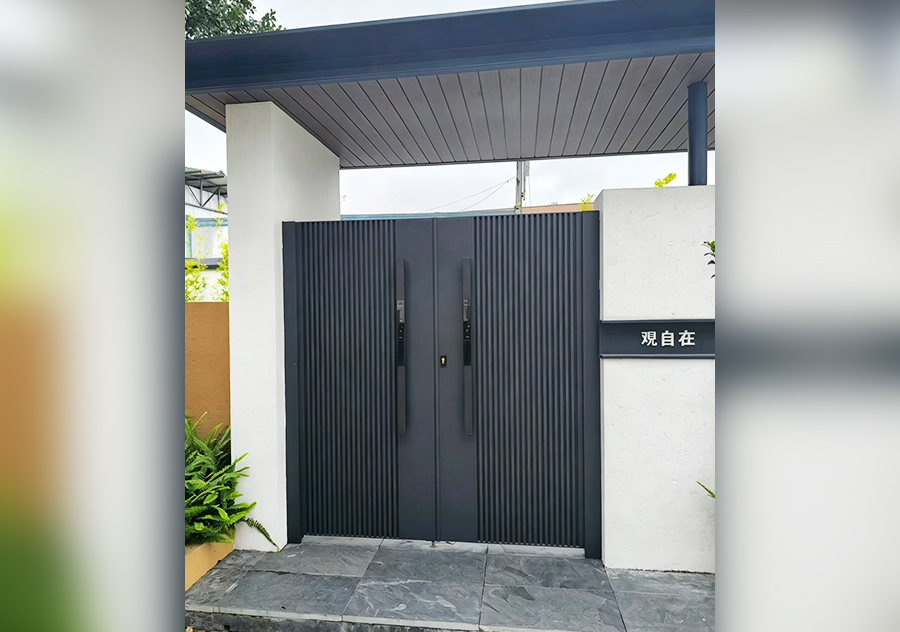
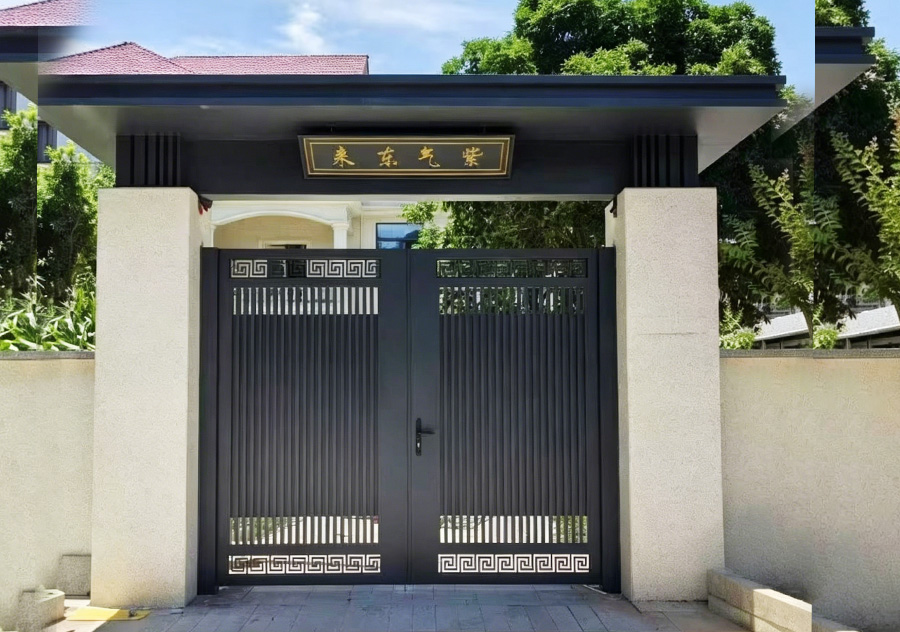
A Simple Garden Gate made from aluminum can fit this type of setting because its design can remain visually restrained while still providing a functional entry point. The relatively light material can make daily opening easier, while its suitability for outdoor environments can reduce the amount of routine care required. The right approach, however, depends on the space around the entrance rather than the gate alone.
A practical garden entrance starts with a clear purpose. A gate may separate a lawn from a pathway, restrict access to a planting area, or provide a passage between the side of a house and the garden. These uses do not necessarily call for elaborate decoration or complicated construction.
A straightforward appearance can be useful because it allows the surrounding landscape to remain visually important. Plants, paving, fencing, walls, and other outdoor elements can provide their own character. A gate with a restrained appearance can sit between these elements without creating a strong visual contrast.
Practicality also comes from everyday operation. The gate should be easy to approach, open, pass through, and close. Its movement should make sense in relation to the available space. If the surrounding area is narrow, a gate that requires a large amount of clearance may create an unnecessary inconvenience.
The design should also work with the existing boundary. A gate that sits between two sections of fencing needs to look and function as part of that opening rather than as a separate feature. Keeping the design uncomplicated can make this coordination easier.
Another consideration is frequency of use. A garden entrance used several times a day has different requirements from one opened occasionally. Regular movement places greater importance on comfortable handling, reliable hardware, and a layout that does not interfere with normal activity in the yard.
Material selection influences both handling and maintenance. Aluminum is commonly considered for outdoor gates because it combines a relatively light structure with suitability for exterior environments. This can be useful where a gate needs to be moved regularly without creating unnecessary effort.
Outdoor conditions can be demanding even in a small garden. Rain can leave moisture on exposed surfaces, while sunlight and changing temperatures can affect materials over time. Soil, leaves, dust, and plant debris may also collect around the entrance.
For an aluminum gate, routine care can generally focus on keeping the surface clean and checking the moving parts. This is different from materials that may require more attention to surface protection as outdoor exposure continues.
| Consideration | Aluminum Gate | Wooden Gate |
|---|---|---|
| Handling | Relatively light for routine movement | Weight can vary with construction and moisture |
| Moisture exposure | Does not absorb water like wood | Can react to changes in moisture |
| Surface care | Usually centered on cleaning and inspection | May require additional surface care |
| Visual character | Clean and restrained | Natural and textured |
| Garden compatibility | Works with many fence and landscape styles | Often associated with natural garden settings |
Material choice should still reflect the surroundings. A shaded garden, an exposed side passage, and a planting area can place different demands on an entrance. Rather than treating one material as suitable for every situation, it is more useful to consider how the material will behave within the intended setting.
For a Simple Garden Gate, aluminum can provide a balance between manageable weight and straightforward outdoor care. The material also allows a clean appearance that does not necessarily compete with plants or other landscape features.
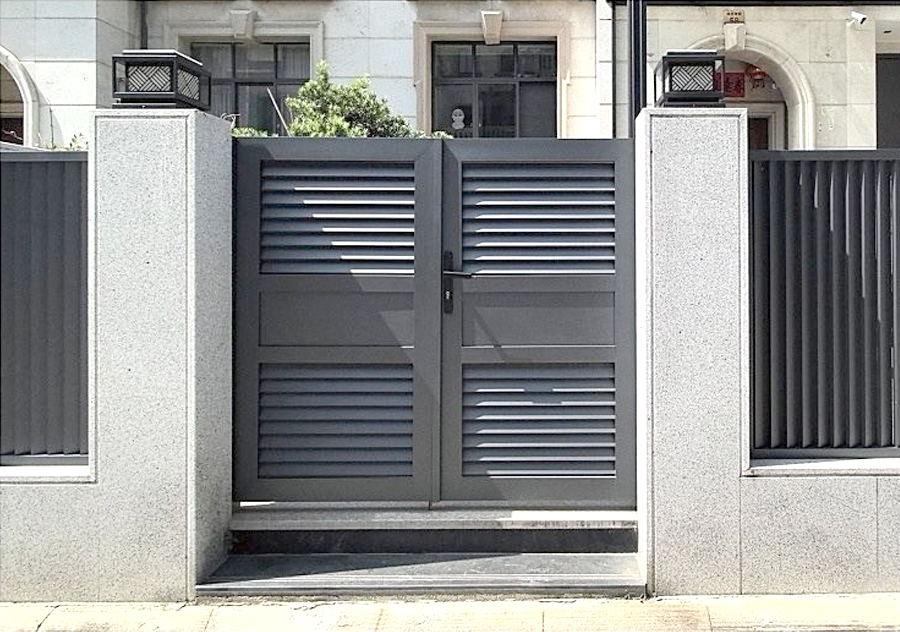
Weight becomes noticeable when a gate is used frequently. A heavy gate may require more effort to swing open, particularly when the entrance is used while carrying gardening tools, containers, plants, or other items.
A lighter gate can make these ordinary tasks easier to manage. The benefit is not limited to physical effort. A manageable gate can also feel less cumbersome when someone needs to pass through quickly or open it while using one hand.
The surrounding space matters here. If the entrance connects two active areas of a garden, convenient movement becomes more important. For example, a path leading from a side entrance to a planting area may be used repeatedly during routine garden work.
A useful layout should allow the gate to move without striking nearby objects. Branches, raised planting beds, walls, storage areas, and decorative features can all affect how comfortably the entrance is used.
There is also a relationship between weight and the supporting components. A gate that is easy to move still needs appropriate hinges, a stable post arrangement, and a latch that lines up correctly. Good daily operation comes from these elements working together rather than from low weight alone.
Small outdoor entrances often have different requirements from large driveway or property gates. A garden path may need a clear pedestrian passage, while a side entrance may have limited room between a building and a boundary fence.
A Simple Garden Gate can be considered for several common residential settings:
The surrounding layout should guide the choice. A narrow side passage may benefit from a gate that does not create unnecessary visual or physical bulk. In a planting area, the gate may need to work around vegetation and changing ground conditions.
Small yards can also benefit from a restrained design. When space is limited, an elaborate gate can make the entrance feel visually crowded. A simpler appearance can leave more attention on the plants, paving, and other elements that shape the garden.
The same principle applies to garden paths. If a path is already visually defined by paving or planting, the gate does not need to become another dominant feature. Its role can remain clear without overwhelming the setting.
The physical opening is one of the first things to consider when placing a gate. A gate needs enough room for people to pass through comfortably while also leaving space for the door to swing.
In a narrow entrance, the opening direction deserves particular attention. A gate that swings into a planting bed may damage plants or reduce usable garden space. One that opens toward a walkway may interfere with people using the path.
The position of the posts also matters. They need to provide a stable location for the hinges while maintaining the intended relationship between the gate and the surrounding fence. Small alignment problems can become noticeable when the gate is opened and closed repeatedly.
Ground conditions should not be overlooked. Grass, soil, paving, and uneven surfaces can affect the clearance beneath the gate. A gate positioned too close to the ground may drag when the surface changes slightly or when debris accumulates.
It is useful to check the entrance from several angles before installation. Consider the approach to the gate, the direction of movement, the space behind the gate, and anything that could obstruct its swing. These simple checks can prevent practical problems later.
An outdoor entrance is exposed to conditions that are rarely completely predictable. Rain, humidity, sunlight, dirt, and garden debris can all become part of routine use.
Water is particularly relevant around gardens because irrigation, rainfall, and damp ground can keep the lower part of an entrance exposed to moisture. Leaves and soil may also collect around the bottom edge, especially where the gate is close to a planting area.
Sun exposure can affect the appearance of outdoor surfaces over time. Temperature changes may also influence the way different materials and components move or age. These factors are reasons to consider the environment around the entrance rather than focusing only on its initial appearance.
A Simple Garden Gate intended for outdoor use should therefore be selected with the local setting in mind. A sheltered courtyard may have different conditions from an open garden path. A side passage beside a wall may also experience different airflow and moisture patterns from an exposed yard.
Regular observation helps identify small issues before they affect normal operation. Dirt around the lower area, a hinge that begins to make noise, or a latch that no longer meets the receiving point can all indicate that some attention is needed.
Maintenance does not have to be complicated to be useful. For an aluminum garden gate, much of the routine work involves cleaning the surface and checking whether the moving components continue to operate properly.
Garden environments naturally produce debris. Soil can be carried onto pathways, leaves can collect around the entrance, and plants may grow toward the opening. Keeping these areas clear helps the gate move without unnecessary contact.
The hinges and latch deserve occasional attention. If movement becomes stiff or the gate no longer closes smoothly, the cause may be related to alignment, accumulated dirt, loose hardware, or changes around the supporting posts.
Maintenance should also respond to the environment. A gate beside a frequently watered planting bed may need more regular cleaning than one in a relatively dry, sheltered area.
The purpose of these checks is not to create a demanding maintenance schedule. It is to keep ordinary wear and environmental effects from becoming larger operating problems.
Garden design varies considerably from one property to another. Some spaces rely heavily on plants and natural textures, while others use paving, clean boundaries, and simple geometric forms. A gate needs to fit within this setting without making the entrance feel disconnected from the rest of the space.
A restrained design can be useful for this reason. It can work alongside a wooden fence, a planted boundary, a simple paved path, or a compact courtyard without requiring the surrounding area to follow a particular decorative style.
Color and surface appearance can also influence the visual relationship. A gate that coordinates with nearby fencing or outdoor structures can make the boundary appear more consistent. At the same time, the gate does not necessarily need to match every surrounding element exactly.
A Simple Garden Gate can therefore serve as a quiet transition between different outdoor areas. Its role is functional, but its appearance still contributes to how the entrance feels.
For smaller gardens, this balance can be particularly relevant. Limited space leaves less room for visual clutter, so a gate with a clear form can help maintain an open feeling while still defining where one area ends and another begins.



Phone
(+86) 138 5893 5900
Address
Chengxi High-tech Zone, Yongkang City, Zhejiang Province, China
Media

 English
 Español
 русский