Folding Screens & Door Panels for Flexible Space Design and Decorative Building Projects
Folding screens and door panels are used in places where a space needs to feel more organized without being permanently closed off. In restaurants, they can separate dining areas. In hotels, they can add privacy to lounges or suites. In homes and offices, they can divide open spaces without building a full wall.
A good Folding Screens & Door Panels system does more than fill a gap. It changes how a room works. It can create privacy, guide movement, soften a large open area, or give a plain doorway a more finished look. For commercial buyers, this makes the product useful across several markets, from interior decoration to building materials and hospitality supply.
Why Folding Screens Are Useful in Modern Interiors
Open-plan spaces are popular, but they’re not always the easiest to use day to day. When everything is open, it can feel a bit noisy or lacking clear separation, especially in shared environments.
Folding screens offer a simple way to deal with that. They don’t change the structure of a room, but they help divide space when needed and can be moved or adjusted without much effort.
In real use, they’re often used to:
- Add privacy in shared spaces
- Separate seating in restaurants
- Break up hotel lounges or reception areas
- Create light division in large rooms
- Reduce direct visibility into certain areas
- Make open layouts feel more manageable
The main advantage is practical flexibility. You’re not locked into one layout, and the space can be adjusted depending on how it’s being used.
Custom Door Panels for Interior and Exterior Design
Door panels are a small part of a building, but they do affect how an entrance or space feels. A simple flat door is fine for function, but adding a panel design can make it look more finished and less plain.
Custom door panels are usually used when standard designs don’t really fit the project style. They can be made for homes, hotels, restaurants, offices, shops, and other building entrances.
In real projects, they’re often used for:
- Interior doors
- Exterior doors
- Entryway decoration
- Window-style decorative panels
- Room dividers
- Cabinet or wall surface details
- Hotel and restaurant partitions
- General decorative wall or space elements
For suppliers and distributors, custom panels are practical because they can be adjusted for different project needs without changing the product type itself.
Why Metal Door Panels Are Popular
Metal door panels are often used in projects that need something durable and easy to maintain. Compared with wood or plastic, metal feels more solid and holds up better when it’s used often.
Another reason is that they’re easy to work with. Metal can be cut, shaped, punched, laser-cut, or folded, and then finished with different coatings. Because of this, it works for both simple designs and more detailed patterns.
People usually choose metal panels because:
- They are strong for daily use
- They keep their shape over time
- They can be used indoors and outdoors
- There are many surface finishes available
- They are easy to clean in busy spaces
- They match modern building styles
- They last longer when properly coated
In places like restaurants, hotels, shops, and public buildings, metal panels are often preferred because they feel more solid and consistent, especially in areas with frequent traffic.
Decorative Door Panel Designs for Different Styles
Decorative door panels can be kept very simple or made more detailed, depending on the space. In modern interiors, people usually prefer clean lines and straightforward patterns. In places like villas, hotels, or restaurants, designs are sometimes more expressive to give the entrance a bit more character.
Common styles include:
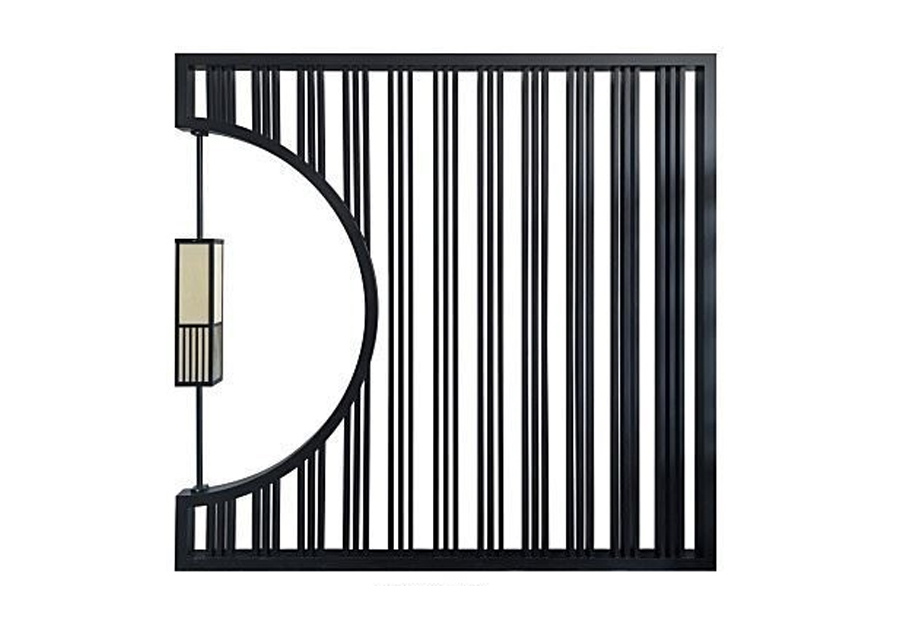
- Geometric metal panels
- Laser-cut patterns
- Perforated designs
- Vertical line panels
- Floral or nature-inspired patterns
- Simple minimalist panels
- Privacy screen-style panels
- Wood-grain metal finishes
- Powder-coated color panels
- Custom pattern designs
In practice, the choice often depends on where the door is used. More detailed designs can work well as a visual focus, but for everyday doors, simpler patterns usually feel more balanced and practical.
Folding Screen Panels for Restaurants and Hospitality Spaces
In places like restaurants, cafés, hotels, and resorts, the layout often needs to change during the day. What feels open and busy at lunchtime may need a bit more privacy or separation in the evening.
Folding screens are a simple way to handle that. They don’t require construction, and they can be moved or adjusted depending on how the space is used.
In hospitality spaces, they are often used for:
- Separating dining tables
- Creating private corners for guests
- Dividing larger banquet areas
- Blocking off service or staff zones
- Adding simple decorative backdrops
- Helping shape the atmosphere in hotel lounges
- Guiding movement in open spaces
- Breaking up large areas without building walls
For restaurant owners and suppliers, folding screens are useful mainly because they give more control over space without making permanent changes to the interior.
Applications in Retail, Office, and Commercial Projects
Folding screens and decorative door panels are used a lot outside of residential spaces too. In commercial projects, they’re mainly there to help organize space without making permanent changes.
You’ll often see them in:
- Restaurants and cafés
- Hotels and resorts
- Office meeting areas
- Retail shops
- Supermarkets and malls
- Exhibition and event spaces
- Apartments
- Villas
- Commercial entrances
- Public interiors
- Showrooms
- Brand display areas
In real use, the function is quite straightforward. Retail spaces use them to separate service or storage areas from customers. Offices use them to create simple, semi-private corners for meetings. In showrooms or display areas, they’re often used more for shaping the space and keeping the layout visually clear.
Customization Options for Folding Screens and Door Panels
Different projects don’t always need the same size or design, so customization is often part of this product.
In most cases, the options include:
- Panel height and width
- Number of folding sections
- Pattern design
- Perforation size and layout
- Frame thickness
- Material choice
- Surface color
- Powder-coated finishes
- Wood-grain effect
- Common colors like black, white, grey, bronze, or custom shades
- Structure type (hinged, sliding, fixed, or freestanding)
- Indoor or outdoor use details
For bulk orders, it’s usually more practical to keep the structure consistent and only change color or surface design. For project-based orders, more detailed adjustments are sometimes needed to match drawings or overall interior style.
Surface Finishes and Color Choices
The surface finish is not just about looks. It also affects how the panel holds up after it’s installed and used for a while. A sample may look fine, but in real conditions, the surface needs to stay stable and easy to maintain.
Common options include:
- Powder-coated panels
- Matte black finishes
- White panels
- Dark grey finishes
- Bronze tones
- Wood-grain metal finish
- Brushed metal surface
- Custom colors
In many modern interiors, black and dark grey are used quite often because they match a lot of materials. White is more common in clean or bright spaces like homes and retail stores. Bronze usually shows up in hotels or restaurants where a warmer tone is preferred. Wood-grain finishes are used when people want a softer look but don’t want the upkeep of real wood.
For outdoor projects, the coating matters more. The surface needs to deal with sun, rain, and temperature changes over time without fading or peeling easily.
What to Consider Before Ordering Custom Panels
Before placing an order, it’s better to go through the basic details first. A design might look fine on paper, but in real installation, the space and usage can make a difference.
Key points usually include:
- Actual panel size
- Indoor or outdoor use
- How much privacy is needed
- Whether airflow or visibility matters
- Opening or folding direction
- Installation method (door or screen setup)
- Fixing details for wall, floor, or frame
- Surface finish and color
- Pattern size and proportion
- Cleaning and maintenance expectations
- Export packaging requirements
- Order quantity and consistency
For importers and distributors, it also helps to clarify how the product will be positioned—whether it’s a standard item, a project-based custom product, or part of a modular system. This affects how it’s stocked, packed, and sold later.
Folding Screens Compared with Fixed Partitions
Folding screens and fixed partitions are both used to divide spaces, but they serve different needs. A fixed partition gives a permanent layout. A folding screen gives more freedom.
| Product Type |
Best Use |
Flexibility |
Typical Projects |
| Folding screen panels |
Temporary or adjustable space division |
High |
Restaurants, hotels, offices, homes |
| Fixed decorative panels |
Permanent decoration or privacy |
Low to medium |
Walls, entrances, façades, partitions |
| Door panels |
Door and window surface decoration |
Medium |
Homes, villas, hotels, retail stores |
| Sliding panels |
Movable space separation |
High |
Offices, showrooms, hospitality interiors |
For spaces that change often, folding screens are usually more practical. For long-term decoration, fixed panels or custom door panels may be a better fit.
Maintenance of Metal Door Panels and Folding Screens
Metal door panels and folding screens are generally easy to take care of. In most cases, they only need light, regular cleaning.
The basic routine is simple:
- Wipe the surface with a soft cloth
- Use mild soap for stains when needed
- Avoid rough pads that could scratch the finish
- Keep hinges and joints free of dust
- Check screws or fittings once in a while
- Don’t use strong chemical cleaners on coated surfaces
- Clean more often if installed outdoors or in humid or coastal areas
- Make sure folding parts still move without sticking
In everyday use, especially in hotels, restaurants, supermarkets, and office buildings, people prefer this type of product because it doesn’t create extra maintenance work. It stays practical, as long as basic cleaning is done regularly.
Choosing the Right Folding Screens & Door Panels Supplier
For wholesalers, distributors, and importers, it’s not only about the design. Consistency across production is usually just as important. A reliable supplier should be able to keep size, finish, pattern, and packaging stable from one batch to another.
When comparing suppliers, buyers often pay attention to:
- Ability to handle custom designs
- Stable metal processing quality
- Consistent surface coating
- Accurate and clean patterns
- Export-friendly packaging
- Support for bulk orders
- Clear drawings and production details
- Experience with commercial or building projects
- Flexibility for different market needs
This matters because folding screens and door panels are usually visible parts of a space. If the finish is uneven or the pattern doesn’t match between batches, it becomes noticeable after installation and can affect the overall result.
Folding screens and door panels usually sit somewhere between function and decoration. They are not complicated products, but they do help with dividing space, adding a bit of privacy, and improving how an interior looks.
In homes, restaurants, hotels, offices, retail stores, supermarkets, and other project spaces, they offer a simple way to adjust layout without changing the structure of the building. Most of the time, the best results come from something that fits the space properly and doesn’t feel overdesigned.
For buyers, it’s mainly about getting the basics right before production starts—material, size, pattern, finish, and how it will be installed. Once these are clear, the rest is usually straightforward in practice.
In our work at Heqi Manufacturer, we often see that clear communication at the beginning helps avoid issues later, especially for custom projects and bulk orders.
FAQ About Folding Screens & Door Panels
1. What are folding screens used for?
Folding screens are used to divide spaces, create privacy, guide movement, or add decoration without building a permanent wall. They are common in homes, restaurants, hotels, offices, and retail spaces.
2. What is the difference between folding screens and door panels?
Folding screens are usually movable or adjustable panels used for space division. Door panels are often fixed or mounted panels used on doors, windows, entrances, or decorative surfaces.
3. Can folding screen panels be customized?
Yes. Folding screen panels can be customized by size, number of panels, pattern, color, frame style, material, and installation method.
4. Are metal door panels suitable for outdoor use?
Metal door panels can be suitable for outdoor use when they have the right surface treatment, such as powder coating or other weather-resistant finishes.
5. What materials are commonly used for decorative door panels?
Common materials include aluminum, steel, stainless steel, and other metal sheets. Some panels may also use mixed materials depending on the project style.
6. Where are decorative door panels commonly installed?
They are commonly installed on interior doors, exterior doors, windows, entrances, wall features, partitions, hotel spaces, restaurants, villas, offices, and retail stores.
7. Are folding screens good for restaurants?
Yes. Folding screens are useful in restaurants because they can separate tables, create private dining areas, hide service zones, and adjust the layout when needed.
8. What finishes are available for metal folding screens?
Common finishes include matte black, white, grey, bronze, wood-grain, brushed metal, and custom powder coated colors.
9. Are folding screens easy to maintain?
Yes. Most metal folding screens are easy to clean with a soft cloth and mild soap. Hinges and moving parts should be checked occasionally.
10. How do I choose the right decorative panel design?
The right design depends on the space, privacy needs, installation method, building style, and maintenance expectations. Simple patterns often work best for daily-use areas, while more decorative patterns suit feature walls or entrances.


 English
 Español
 русский