Call us for a FREE QUOTE: (+86) 138 5893 5900

Mail us to: [email protected]
Call us for a FREE QUOTE: (+86) 138 5893 5900
Mail us to: [email protected]


So you're looking at custom metal gates. It's not just picking a pattern and a color, though that's what most people start with. There's more under the surface. Material performance, security, how the property is laid out, weather, installation, long-term upkeep. A gate that looks nice should also open without drama, survive daily use, and not clash with the architecture.
Aluminum and steel gates are popular for homes, commercial buildings, industrial sites. They're durable and give you design freedom. But these two metals behave differently—weight, strength, corrosion, price. Knowing those differences is how you end up with a gate that actually works.
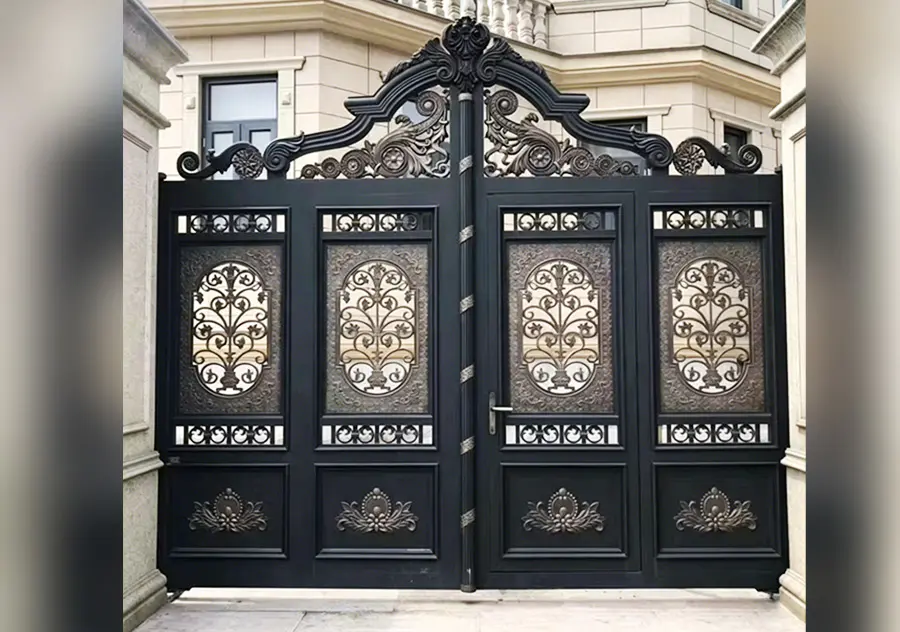
Understand the Difference Between Aluminum and Steel Gates
Before you ask for a quote, figure out what you're actually buying. All aluminum? All steel? A mix? "Aluminum Steel Gate" gets thrown around loosely, so confirm the material specs.
Aluminum is light and forms its own protective oxide layer. Good for coastal areas, or anywhere you want to cut weight. Downside? Less stiff and less strong than steel at similar dimensions. So the profiles and structural design need to suit the job.
Steel is strong, rigid, and handles demanding security work. It supports substantial frames and intricate decorative details. But untreated steel rusts when moisture and oxygen get at it. Galvanizing, priming, protective coatings—those help.
Which one wins? Depends on gate size, structure, location, workload.
The following table summarizes key differences buyers should evaluate when comparing options.
| Feature | Aluminum Gate | Steel Gate | Combined Aluminum and Steel Design |
|---|---|---|---|
| Weight | Generally lightweight | Generally heavier | Depends on the component arrangement |
| Structural strength | Suitable strength when properly engineered | Often preferred for demanding structural or security needs | Can combine different material properties |
| Corrosion resistance | Generally good, especially with suitable finishes | Depends heavily on protective treatment and maintenance | Requires appropriate protection for each metal and its connections |
| Installation | Lower weight may simplify handling | May require stronger posts, hinges, and lifting equipment | Depends on total weight and construction |
| Design flexibility | Supports modern, clean-lined designs | Suitable for traditional, ornamental, and heavy-duty designs | Allows different finishes and design elements |
| Maintenance | Usually relatively low | May need coating inspections and rust treatment | Requires checks of coatings, fasteners, and metal interfaces |
General comparisons, not promises. Alloy grade, profile thickness, fabrication quality, surface treatment, installation—all of it shifts the outcome.
Choose a Design That Matches the Property
Custom gate designs should balance looks with purpose. What matters more—privacy, access control, security, visual appeal, or some mix?
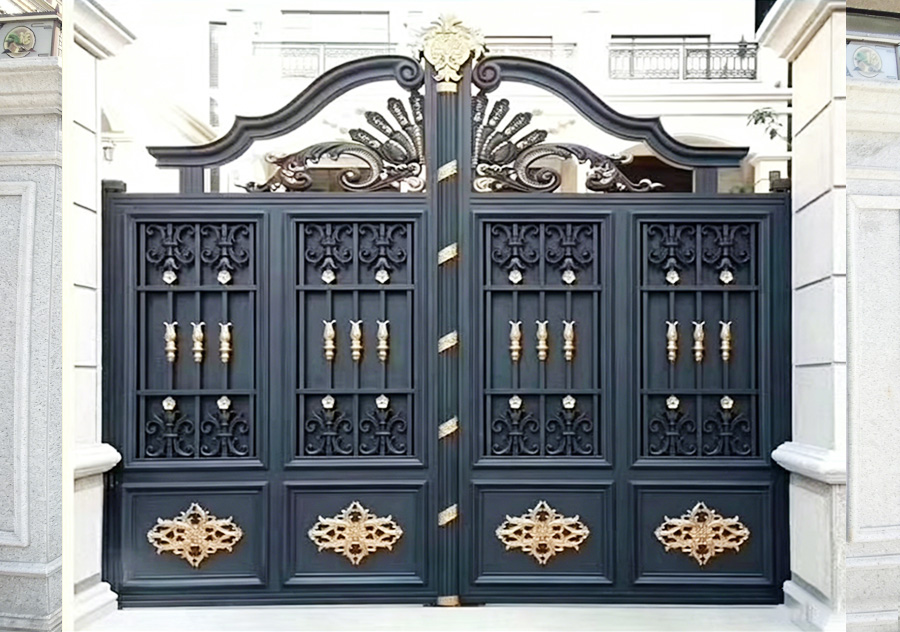
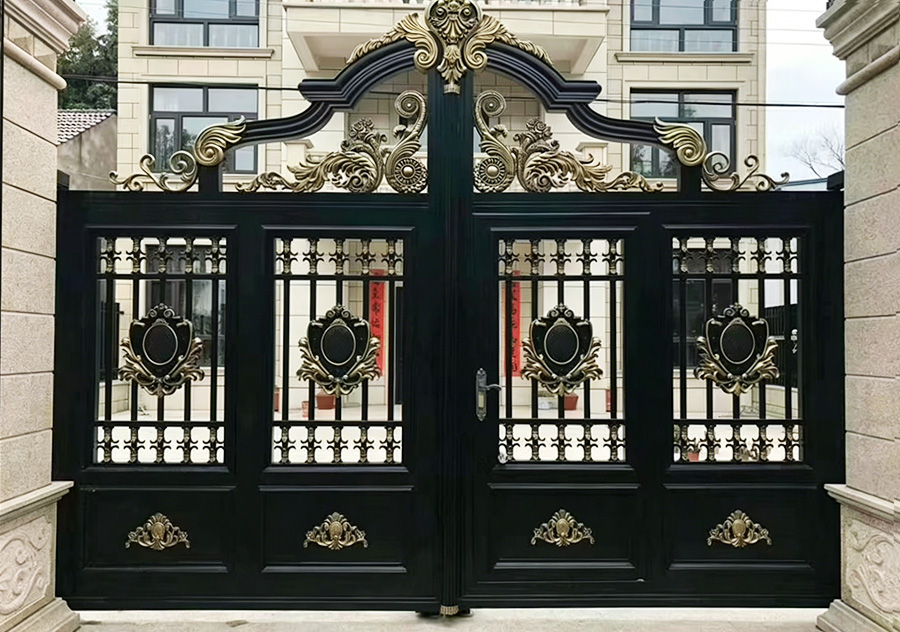
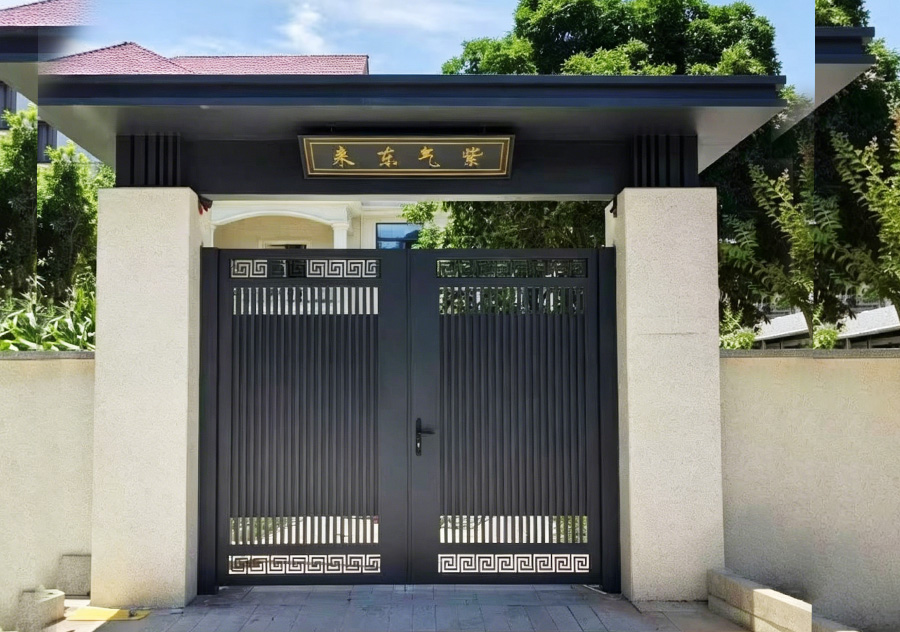
Vertical-bar gates: traditional look, airflow, visibility. Good for residential entrances, gardens, commercial spots where full privacy isn't needed.
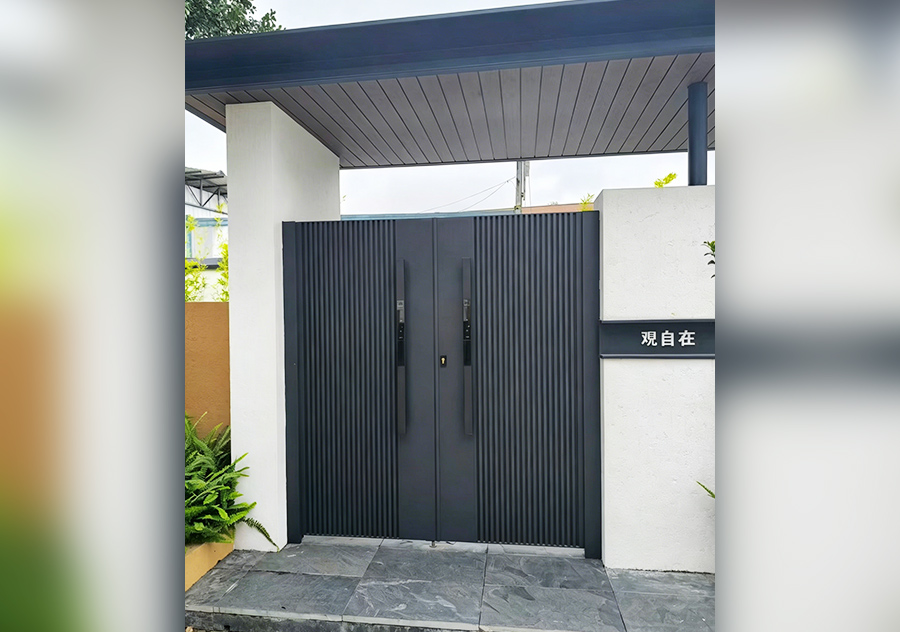
Horizontal-slat gates: contemporary feel, fits modern architecture. Spacing affects visibility and privacy. Solid or closely spaced panels catch more wind.
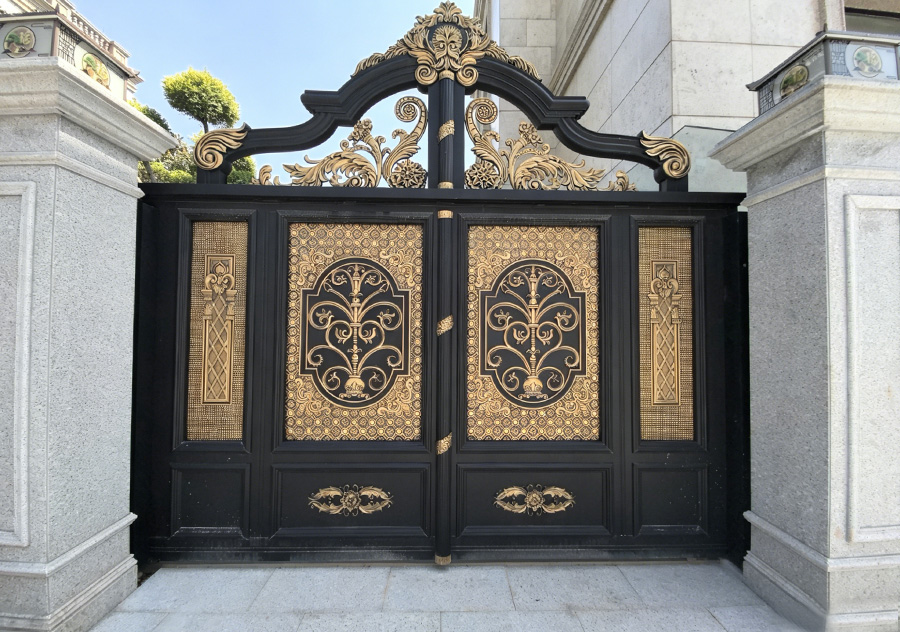
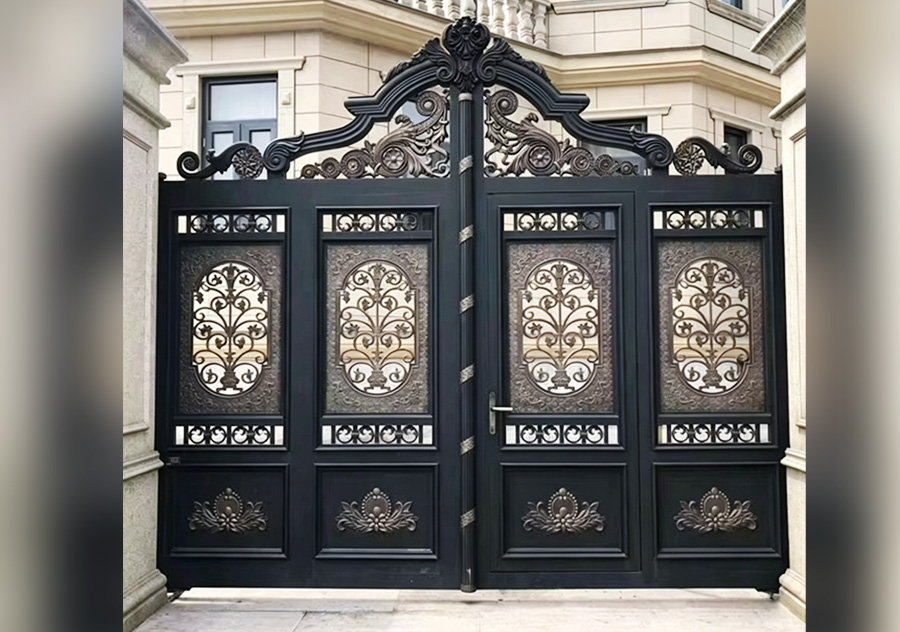
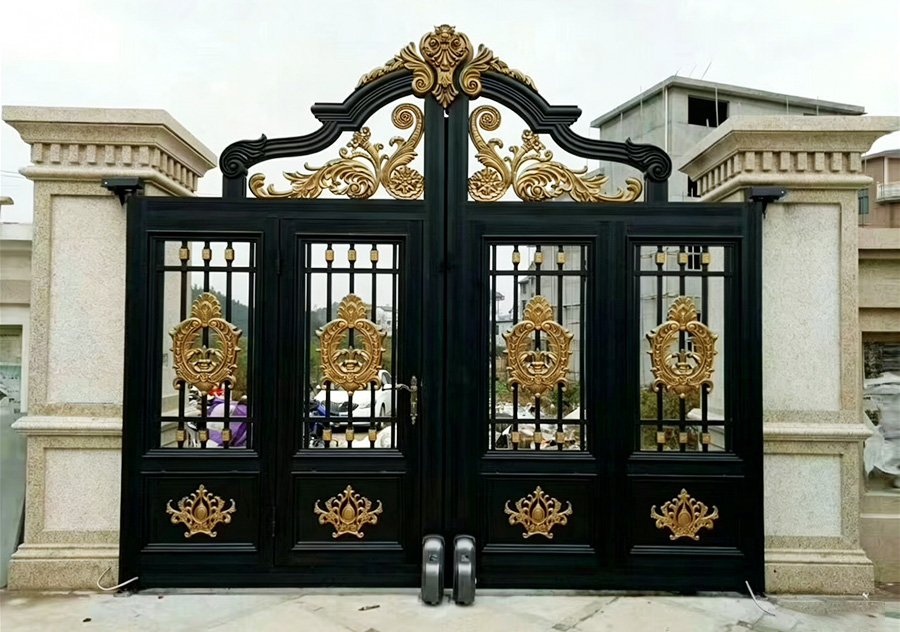
Ornamental metal gates: decorative bars, curves, custom patterns. Steel handles elaborate detailing. Aluminum gives you a lighter option.
Solid-panel gates: more visual screening, but structural planning gets serious. Big solid surfaces take wind pressure, especially in exposed spots. Frame, posts, foundations, hinges, operating equipment—all designed for the expected loads.
Ask for dimensioned drawings and material samples. Confirm proportions, color, surface texture, how it'll look next to fences, walls, surrounding architecture.
Evaluate Surface Treatments and Corrosion Protection
Surface treatment affects appearance, durability, maintenance.
Steel gates: hot-dip galvanizing gives a protective zinc coating. Primers, exterior-grade paint or powder coating add more. The right system depends on environment, fabrication method, coating specs.
Aluminum gates: powder coating or anodizing. Ask about coating preparation, thickness, color consistency, cleaning procedures.
Coastal, humid, industrial, high-pollution environments? Pay extra attention. Salt and pollutants eat unsuitable finishes. Even corrosion-resistant materials need care.
Combined aluminum and steel? Ask how dissimilar metals are joined and protected. Direct contact between different metals plus moisture can cause galvanic corrosion. Isolation, compatible fasteners, coating details—may be needed.
Check Structural Design, Hardware, and Installation
A good gate is more than metal panels. Frame, hinges, posts, anchors, locks, foundations—they work as a system.
Confirm opening width, gate height, swing area, driveway slope, clearance from vehicles or pedestrians. Swing gates need room to open. Sliding gates need a track or cantilever setup and space to retract.
Large or automated gates? Get the supplier or a qualified installer to assess weight, wind exposure, operating cycles, hardware capacity. Automation must match the gate's dimensions and use. Powered gates need safety measures—obstruction detection, entrapment protection—per local requirements.
Installation quality matters just as much. Bad alignment increases friction, strains hinges or operators, causes premature wear. Confirm who handles site measurements, foundation work, electrical connections, final commissioning. Get that straight before approving the order.
Questions Buyers Should Ask Before Ordering
A detailed quote makes supplier comparisons easier. Ask for:
A lower price might leave out hardware, site prep, or protective treatment. Compare the complete supplied and installed system, including maintenance over its service life.
Make a Confident Custom Gate Investment
The right custom gate combines suitable materials, practical engineering, weather protection, and a design that fits the property. Aluminum works when lower weight and corrosion resistance matter. Steel may be better for serious structural strength. Combined designs? Consider them when the manufacturer can document how the materials are joined and protected.
Before ordering, verify specs, review drawings, assess installation conditions, clarify the full scope of supply. That's how you end up with an Aluminum Steel Gate that looks right, operates reliably, and holds up over time.

Phone
(+86) 138 5893 5900
+86 15158991377
Address
Chengxi High-tech Zone, Yongkang City, Zhejiang Province, China
Media

 English
 Español
 русский