Call us for a FREE QUOTE: (+86) 138 5893 5900

Mail us to: [email protected]
Call us for a FREE QUOTE: (+86) 138 5893 5900
Mail us to: [email protected]

 Home / News / Industry News / Modern Aluminum Fence Gate Design Trends for Contemporary Outdoor Spaces

An outdoor entry gate does far more than draw a boundary around your property. It sets the entire curb appeal of your home, regulates how people and vehicles move in and out, and defines how much privacy your yard feels on a daily basis. For contemporary outdoor spaces, aluminum fence gates have become the go-to choice, balancing a sleek, polished aesthetic with remarkably low upkeep. Available in a huge range of styles, finishes, sizes, and operating systems, they work equally well for front yards, driveways, side gardens, and patio enclosures.
Gone are the days when aluminum gates meant only basic vertical pickets. Today's designs lean into horizontal slats, mixed material accents, rich dark finishes, and smart automation, giving homeowners endless ways to tailor a gate that fits their property perfectly. Below are the defining modern aluminum fence gate design trends shaping contemporary outdoor spaces, plus practical guidance for choosing and maintaining one that lasts.
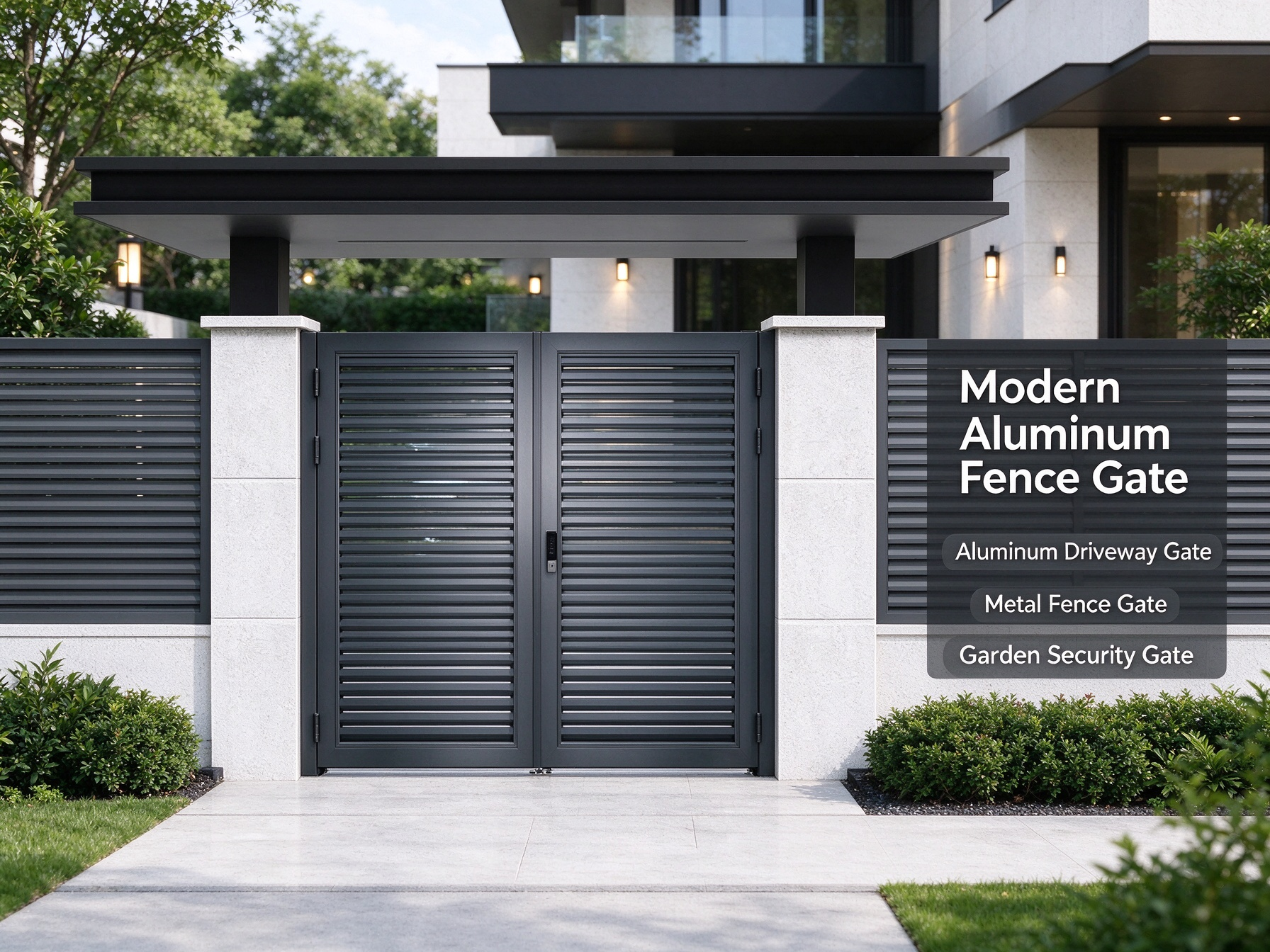
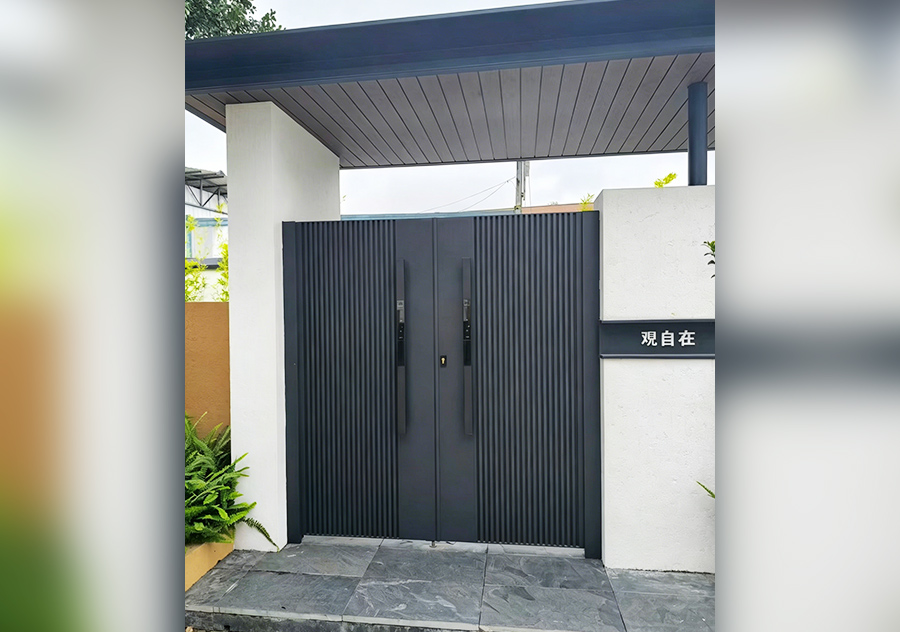
Minimalism continues to dominate contemporary exterior design, and aluminum gates are a natural fit for the look. Instead of ornate scrollwork, curved details, or busy patterns, today's most popular styles prioritize straight edges, slim framing, and balanced, intentional proportions.
A gate with a thin, unobtrusive frame and evenly spaced members creates a neat, open feel at the entrance. It pairs seamlessly with homes that feature flat roofs, expansive windows, simple facade detailing, or geometric landscaping, keeping the overall visual language consistent across the property. The style scales easily, too: a small pedestrian side gate can use the exact same design language as a wide double driveway gate, creating a cohesive look across your front yard.
“Simple” doesn't mean generic, though. Small tweaks make a big difference in the final feel. Frame thickness, bar spacing, overall gate height, and the shape of the opening all shift the vibe. A sprawling estate might call for a wider, more substantial frame with bold visual weight, while a small garden entrance works better with a lighter, more delicate build. For the most integrated look, match the gate's color and layout to the surrounding fence, rather than treating it like a separate add-on feature.
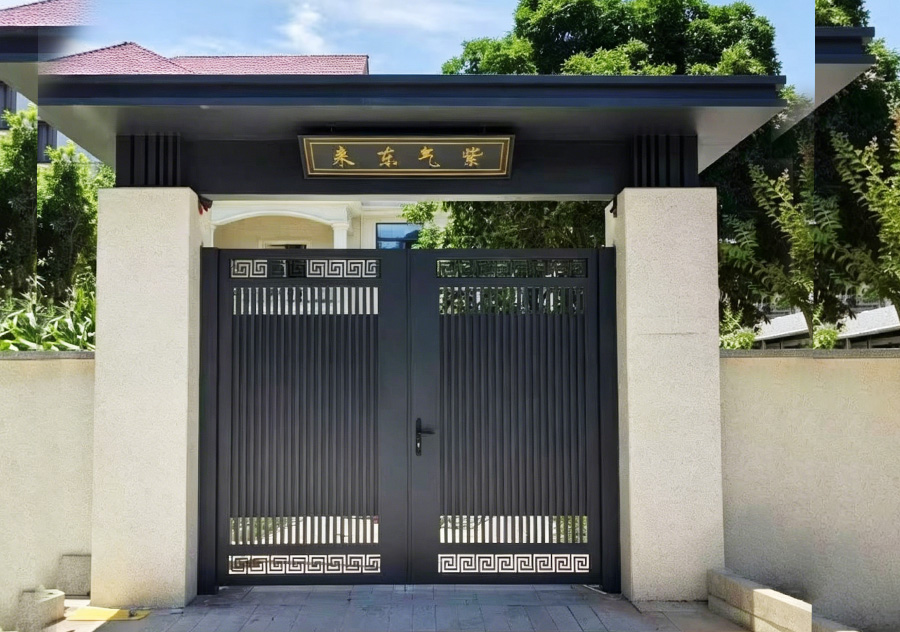
Horizontal slats are easily one of the most recognizable trends in modern aluminum gate design. Their long, continuous lines visually widen an entrance, making them a perfect match for contemporary home facades and neatly landscaped driveways.
The style also gives homeowners precise control over privacy and light flow. Wider gaps between slats let in more sunlight and keep the view open, while closer spacing creates a more screened, private feel. The right spacing comes down to location: a front gate facing a quiet, low-traffic street might work best with an open configuration that keeps your landscaping visible, while a backyard or patio gate benefits from tighter spacing for more seclusion.
Slat width changes the look, too. Narrow slats create a fine, textured pattern, while wider slats give the gate a bolder, more solid presence. There's one practical caveat to keep in mind: horizontal surfaces catch dust, leaves, pollen, and debris. If you live in a windy area or a region with heavy tree pollen, opt for a design with smooth, easy-to-wipe slats and minimal ledges where debris can build up.
Color is one of the simplest ways to transform the look of an aluminum gate, and deep, muted neutrals are having a major moment for contemporary properties.
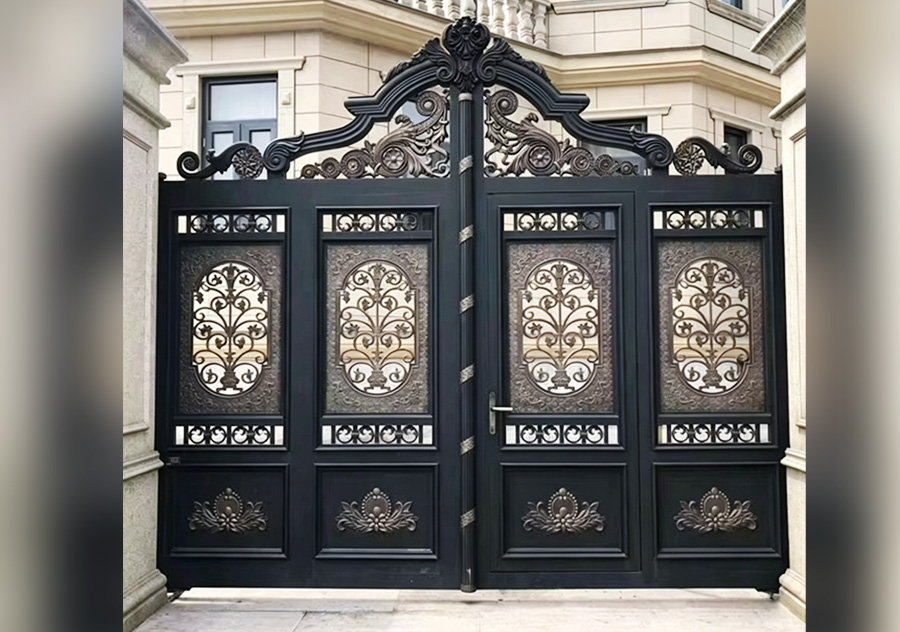
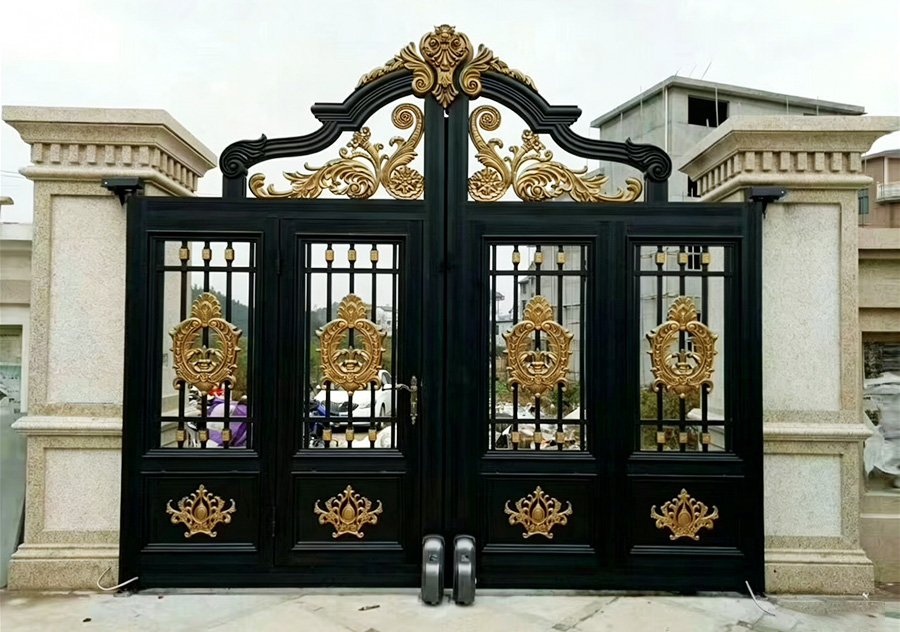
Matte black remains the undisputed favorite, offering a sharp, defined silhouette that pairs beautifully with white stucco, gray concrete pavers, glass paneling, and vibrant green foliage. Charcoal gray is a softer alternative that reads a little less stark, while bronze and dark brown finishes complement homes with warm stone, brick, or wood accents.
Lighter hues still have their place, of course. White or light gray gates feel bright and airy, making them a great pick for coastal homes or properties with pale exterior walls. Just note that dirt, scuffs, and water marks tend to be more visible on lighter finishes, so they may require more frequent wiping in dusty or rainy environments.
When picking a color, look at the whole exterior picture, not just the gate itself. Your garage door, window frames, outdoor light fixtures, house numbers, and adjacent fencing should all coordinate — they don't need to match exactly, but they should feel like they belong together. Don't overlook the quality of the finish, either. A high-quality exterior-grade powder coating protects the aluminum from corrosion and keeps it looking fresh for years. Before buying, ask about the coating process, expected finish lifespan, and how well it holds up to your local climate, especially if you live near the coast where salt air is a factor.
Not every gate needs to block the view entirely. Open aluminum designs remain hugely popular for homeowners who want a clear property boundary without making their entrance feel closed off or fortress-like.
Classic vertical picket gates are a prime example. Their straightforward, timeless layout works with a huge range of property styles, from modern townhouses to spacious suburban homes. Because the gaps let light and air flow freely, the entrance feels open and welcoming, rather than enclosed and heavy.
Open designs are especially smart when landscaping is a key part of your property's curb appeal. They let passersby see garden beds, specimen trees, and other design features from the street, and they maintain a visual link between your front yard and the surrounding neighborhood.
The tradeoff is privacy. Widely spaced bars won't hide outdoor seating areas, front windows, or patio spaces from view. If you want more screening, a slatted design with narrower gaps is usually a better bet. You'll also want to factor in safety: bar spacing, gate height, and overall construction should meet your needs for kids, pets, and any local building code requirements.
For a more distinctive look, many contemporary designs pair aluminum framing with other materials, adding warmth, texture, or visual interest without sacrificing durability.
Wood-look composite panels are one of the most common combinations. They bring the natural, organic look of timber to the design, without the upkeep of a solid wood gate. The look pairs beautifully with garden settings, stone walkways, and homes with warm exterior color palettes. Glass infill and masonry accents work too: a sleek aluminum gate set beside a smooth concrete pillar creates a bold, modern industrial look, while frosted glass panels can add refinement to mid-century or luxury contemporary homes.
When mixing materials, always keep outdoor durability top of mind. Natural wood accents will need regular sealing and staining, and any decorative panels must be rated for full exposure to sun, rain, and temperature swings. Even if the gate is primarily aluminum, secondary components will impact your long-term maintenance workload. As a rule of thumb, stick to one primary material and one contrasting accent — too many different finishes will make the entrance look cluttered and unbalanced.
How a gate operates is just as important as how it looks, and sliding aluminum gates have grown in popularity as more homeowners look for space-saving entry solutions.
A traditional swing gate opens inward or outward, and it needs clear, level space to swing fully open. Sloped driveways, parked cars, narrow entryways, or nearby walkways can make swing gates impractical or even impossible to install. Sliding gates move sideways along a track or trackless system, freeing up the space directly inside and outside the entrance. That makes vehicle access easier and more convenient, especially on tight properties. Their long, linear shape also pairs perfectly with horizontal slat designs and minimalist framing, making them a natural fit for modern aesthetics.
They do have requirements, though: you'll need enough open space alongside the driveway for the gate to retract fully. During planning, account for ground condition, supporting posts, roller and guide systems, and proper drainage along the track. For properties with the clearance for them, swing gates are still a solid, simple option, especially for smaller pedestrian entrances. At the end of the day, the best operating system comes down to your actual site conditions, not just the latest design trend.
| Gate type | Main advantage | Important consideration | Common application |
|---|---|---|---|
| Swing gate | Straightforward opening design | Needs clear space to swing | Pedestrian entrances and suitable driveways |
| Sliding gate | Saves space directly behind the entrance | Needs side clearance | Wider driveways and restricted front areas |
| Double swing gate | Creates a balanced, wide entrance | Requires room for both panels | Larger residential driveways |
| Automated sliding gate | Convenient for frequent vehicle access | Requires suitable power and safety systems | Busy entrances and private driveways |
Convenience is an increasingly big part of modern gate design, and automated access systems have gone from a luxury upgrade to a standard consideration for many homeowners. Being able to open and close your gate without getting out of the car is a major quality-of-life boost, especially in bad weather or on busy driveways with frequent traffic.
Today's systems offer a range of control options: remote fobs, keypad entry, card readers, intercom systems, and app-based control via smartphone. Many also let you manage access for family, guests, and service providers remotely. Automation should be planned alongside the gate itself, not added on as an afterthought. The motor has to be sized correctly for the gate's weight, dimensions, opening style, and how often it will be used. A heavy double driveway gate needs a very different system than a lightweight side pedestrian gate.
Safety features are non-negotiable. Look for obstruction sensors, audible warning devices, manual release overrides, and proper guarding around all moving parts. Installation should always follow local building codes and the manufacturer's exact guidelines. You'll also want to make sure all motors, controls, wiring, and access devices are rated for outdoor use and protected from your local weather conditions.
A gate that looks stunning in a catalog might feel completely wrong on your home. Before settling on a style, take stock of your entrance size, surrounding fence, ground conditions, and how you use the space every day. A narrow side pedestrian entrance, for example, only needs a lightweight gate with a simple latch. A wide, high-traffic driveway will call for a sturdier frame, heavy-duty support posts, and an operating system built for frequent use.
Local climate matters too. Aluminum naturally resists rust far better than untreated steel, but overall longevity depends just as much on coating, fasteners, hinges, hardware, and installation quality. Coastal properties, in particular, need finishes and hardware specifically formulated to stand up to salt air. It's also smart to check local regulations before you order. Many areas have rules about front fence height, visibility at driveway approaches, pool enclosure requirements, and automated gate safety standards — all of which can impact your design and installation choices.
A few pre-purchase checks will save you headaches later. Measure your opening accurately, including both clear opening width and side clearance for operation. Be clear on how much privacy and visibility you actually need, and coordinate color and style with your house and existing fence. Confirm frame construction, material grade, and hardware specifications, verify the finish suits your climate, and discuss installation requirements and local codes with your installer upfront.
One of the biggest reasons homeowners choose aluminum over other metal gates is its low-maintenance nature. It won't rust the way untreated steel does, and it doesn't need regular repainting just to prevent corrosion — as long as the finish stays intact.
That said, aluminum gates aren't completely maintenance-free. Dust, road grime, pollen, and salt deposits will build up on the surface over time. Washing the gate periodically with plain water and a mild detergent will keep it looking its best. Skip abrasive scrubbers and harsh chemical cleaners, unless the manufacturer specifically confirms they're safe for the finish. Moving parts need regular attention too: hinges, rollers, latches, locks, and automation components should be inspected and lubricated according to the recommended schedule. If your gate starts to drag, make unusual noises, or close unevenly, address the issue right away before it causes more wear and tear.
When comparing options from different suppliers, ask about the aluminum alloy grade, surface treatment process, hardware material, warranty coverage, and recommended maintenance schedule. These details will give you a much better sense of real-world performance than just looking at photos.
A great modern aluminum gate should look great from the street and operate smoothly for years. Before placing your order, walk through all specifications with your supplier or installer to avoid surprises. Custom sizing and design options are incredibly useful if you have an unusual opening size, or if you want your gate to match an existing fence perfectly. Just be sure to confirm which features are standard and which cost extra, as premium finishes, custom dimensions, or automation packages can add to both total cost and lead time.
For commercial buyers, contractors, and property developers, consistent dimensions and finishes across multiple gates are usually a top priority. Request clear shop drawings and written specifications upfront to avoid miscommunication during production and installation.
At the end of the day, the best aluminum fence gate is one that fits your property's style, works with your daily routine, and stands up to your local weather. By balancing design trends with practical considerations like space, privacy, operation, and maintenance, you can choose a gate that elevates your outdoor space and stays functional and attractive for years to come.

Phone
(+86) 138 5893 5900
+86 15158991377
Address
Chengxi High-tech Zone, Yongkang City, Zhejiang Province, China
Media

 English
 Español
 русский