Call us for a FREE QUOTE: (+86) 138 5893 5900

Mail us to: [email protected]
Call us for a FREE QUOTE: (+86) 138 5893 5900
Mail us to: [email protected]


For distributors, choosing an aluminum fence supplier is about more than finding a factory with a big product catalog. The manufacturer needs to deliver consistent quality, accurate dimensions, reliable finishes, useful customization, and steady production. Just as importantly, the factory should provide the information distributors need to sell and install the products properly.
Aluminum fencing is used around homes, commercial properties, gardens, pools, schools, parks, and other outdoor spaces. Each application can have different requirements for strength, appearance, corrosion resistance, installation, and maintenance.
For distributors and importers, the wrong supplier can lead to returns, installation problems, delayed projects, and extra inventory costs. So evaluating an Aluminum Fence Manufacturer is an important part of the sourcing process.
This guide looks at the main points distributors should check before starting a long-term supply relationship.
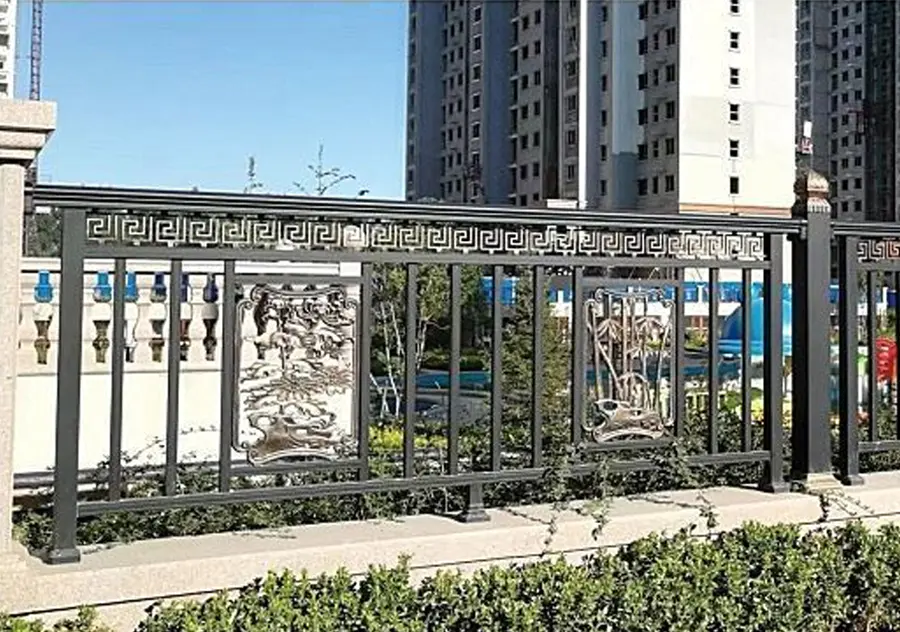
An aluminum fence may look like a fairly simple product. Usually, there are posts, rails, pickets, panels, gates, brackets, and hardware. But all those parts have to fit together correctly.
Even a small difference in post size, rail position, or gate dimensions can make installation harder.
For distributors, consistent production is therefore just as important as how the fence looks.
A capable manufacturer should be able to maintain:
This becomes especially important when a customer places another order months after the original purchase.
The aluminum alloy, profile design, and wall thickness all affect the fence's weight, rigidity, corrosion resistance, and general service life.
Different manufacturers may use different aluminum grades and profile specifications. There is no point comparing two fences only by appearance if their material construction is different.
Distributors should ask about:
The material should also fit the intended application. A decorative residential fence may have different requirements from a commercial perimeter system.
Most aluminum fence systems use extruded profiles. The shape and dimensions of these profiles influence both the appearance and the way the fence handles normal loads.
Posts provide the main vertical support, while rails connect the pickets or panels. Gates need additional attention because hinges and latches put extra loads on the gate frame.
| Component | Main factor to review |
|---|---|
| Post | Size, wall thickness, structural support |
| Rail | Profile shape, span, stiffness |
| Picket | Dimensions, spacing, appearance |
| Gate frame | Reinforcement and hardware compatibility |
| Brackets | Fit and load transfer |
| Caps | Design and outdoor durability |
For professional distribution, it is useful if the manufacturer can provide accurate profile and component drawings.
Aluminum has good resistance to corrosion, which is one reason it is widely used for outdoor fencing. Still, the surface treatment matters.
Powder coating is commonly used on aluminum fence products to provide the required color and an additional protective layer.
Distributors should ask about:
A good-looking sample does not automatically mean every production batch will look the same.
Buyers should also find out how the factory deals with scratches, coating defects, and noticeable color differences during inspection.
Color can become a surprisingly big issue when customers add fencing later.
For example, a customer may buy fence panels today and order another section six months later. If the new panels have a visibly different shade, the difference can stand out after installation.
Distributors should ask how the factory controls color between production batches.
For custom colors, a physical sample or color reference can be approved before larger production begins.
| Color-related issue | What distributors should check |
|---|---|
| Standard color | Available stock colors |
| Custom color | Minimum order requirements |
| Batch variation | Manufacturer's control process |
| Sample approval | Whether physical approval is available |
| Touch-up | Availability of matching repair products |
Clear color requirements make later disputes much easier to avoid.
Distributors do not always want to sell exactly the same fence styles available from every other supplier.
A manufacturer that can handle reasonable customization can help create a more specific product range.
An Aluminum Fence Manufacturer may offer changes to:
This can be useful for distributors serving different regional markets.
Customization does come with trade-offs, though. It may affect tooling, MOQ, production time, and unit cost. Those details should be discussed before development starts.
Gates are often sold as part of the same fence system, but they deserve a separate look.
Unlike a fixed fence panel, a gate moves repeatedly and carries the load of hinges, latches, and sometimes automatic opening equipment.
Buyers should check:
A gate can look fine in a product photo but still cause trouble if its dimensions or hardware are difficult to install.
A complete fence system usually contains many individual pieces. They need to work together without installers having to improvise on site.
If a distributor purchases panels, posts, gates, brackets, caps, and hardware from one manufacturer, the supplier should provide clear information about their compatibility.
Useful information includes:
This matters even more when the distributor sells complete kits.
If components come from different factories, they should be tested together before being marketed as one system.
Fence installation can already involve plenty of measuring, cutting, and adjustment. Inconsistent components make the job harder.
For example, differences in panel width or bracket hole positions may force installers to make changes at the job site.
Manufacturing tolerances should therefore be part of the supplier evaluation.
A factory should have suitable equipment and inspection methods for cutting, drilling, extrusion processing, and assembly.
| Inspection area | Purpose |
|---|---|
| Profile dimensions | Confirms component consistency |
| Cut length | Supports proper assembly |
| Hole position | Helps ensure hardware fit |
| Panel width | Maintains consistent installation |
| Coating | Checks surface quality |
| Gate dimensions | Supports proper gate operation |
For distributors, consistent manufacturing can mean fewer installation complaints and returns.
It is useful to understand how a manufacturer actually produces its fencing.
Depending on the factory, the process may include:
Not every manufacturer handles every step in-house. That is not necessarily an issue, but buyers should know which processes the factory controls directly.
This gives distributors a clearer picture of possible quality and lead-time risks.
Fence profiles are long and can take up considerable container space. Packaging is therefore more than just a cosmetic detail.
Weak packaging can result in scratched surfaces, bent profiles, damaged corners, or missing hardware during transportation.
Distributors should ask about:
Packing methods also affect how much product can fit into a container, which can change the final landed cost.
A factory may produce good samples but still have difficulty handling larger or repeat orders.
For distributors, supply stability matters because they often need to keep products available for their own customers.
Useful questions include:
The answers help distributors plan purchasing and inventory more realistically.
Some distributors want to sell fencing under their own brand.
Depending on the manufacturer, OEM support may include:
This can be useful once a distributor has built a defined product range.
For custom projects, buyers should also clarify who is responsible for artwork, tooling, molds, labels, and packaging materials.
Distributors should have a clear idea of how the factory checks its products.
Depending on the fence system, quality control may cover:
For larger orders, buyers can also consider pre-shipment inspections or third-party inspection.
It helps to agree on inspection criteria before production. That way, both sides have the same reference when checking an order.
Samples are still one of the simplest ways to evaluate a supplier.
Photos can show the general appearance, but a physical sample lets distributors look at the actual construction.
A sample can be checked for:
For custom products, sample approval is particularly useful because it gives both sides something concrete to work from before mass production.
Clear installation information can make the product easier for distributors and their customers to use.
Useful documentation may include:
For distributors working with professional installers, accurate documentation can also reduce repeated technical questions.
Before choosing a long-term supplier, distributors can use a simple checklist.
| Evaluation factor | What to check |
|---|---|
| Material | Aluminum alloy, profile size, wall thickness |
| Product range | Panels, posts, gates, accessories |
| Surface finish | Powder coating and color consistency |
| Customization | Sizes, styles, colors, branding |
| Manufacturing | Equipment and production processes |
| Quality control | Inspection procedures |
| Samples | Availability and approval process |
| Packaging | Protection and shipping efficiency |
| Capacity | Ability to support repeat orders |
| Lead time | Normal and peak-season schedules |
| OEM support | Private label and custom development |
| Documentation | Drawings and installation information |
Using the same checklist for several suppliers makes the comparison much easier.
For distributors, the quoted unit price is only part of the real purchasing cost.
A cheaper fence can end up costing more if inconsistent dimensions lead to installation issues, damaged packaging creates claims, or coating problems increase returns.
The total cost may include:
So when comparing factories, it is worth looking beyond the number on the quotation sheet.
Choosing an Aluminum Fence Manufacturer is a long-term sourcing decision for many distributors, especially when they plan to build their own product range.
The manufacturer should be able to provide stable materials, accurate profiles, consistent finishing, compatible components, dependable production, and clear documentation. OEM and customization support can also be useful when the distributor wants products designed for a particular market.
Before placing large orders, buyers should check samples, quality procedures, packaging, lead times, and technical specifications. Once those requirements are agreed, they can be used as a reference for future orders.
Communication matters too. If the factory changes a material, color, component, packaging method, or production schedule, distributors should know about it before the change affects an order.
For distributors, evaluating a factory should not come down to one specification or simply the lowest quotation.
It is better to look at the whole supply chain, from aluminum materials and profile production to powder coating, assembly, inspection, packaging, customization, and delivery.
An Aluminum Fence Manufacturer that can manage these areas consistently can become a useful long-term production partner, not just another source for individual fence panels.
Before committing to larger volumes, distributors can request samples, technical drawings, product specifications, and clear commercial terms. Once the product requirements are settled, the same standards can be applied to repeat orders.
That makes supplier management simpler and gives distributors a clearer way to build an aluminum fencing range that is practical to sell, install, and reorder.

Phone
(+86) 138 5893 5900
+86 15158991377
Address
Chengxi High-tech Zone, Yongkang City, Zhejiang Province, China
Media

 English
 Español
 русский